[논문리뷰] SAS: Simple Attention Sparsification via End-to-End Optimization of Context Ranking
링크: 논문 PDF로 바로 열기
저자: Zhiwei Li, Lei Zhu, Hao Gu, et al.
1. Key Terms & Definitions (핵심 용어 및 정의)
- Attention Sparsification: Transformer 모델에서
cumulative attention cost를 줄이기 위해 각 쿼리(query)에 대해 전체context unit(토큰 또는 블록) 중 일부를 선택하는 과정입니다. - Context Ranking: 주어진
attention budget내에서 다음 토큰 예측에 가장 유용한context unit의 순위를 매기는 과정입니다. - Language Modeling Loss: 언어 모델의 다음 토큰 예측(next-token prediction) 능력을 직접적으로 최적화하는 데 사용되는 표준
loss function입니다. - Gated Attention:
selector가 생성하는continuous score를attention logits에log-space gate형태로 주입하여language modeling loss로부터selector로gradient가 흐를 수 있도록 하는 메커니즘입니다. - Ranking Misalignment: 기존
distillation-basedsparsification방법들이dense attention distribution을 모방하는 데 초점을 맞춤으로써, 제한된attention budget하에서 모델의 최종 예측에 미치는 실제 영향과context unit의 중요도 순위가 일치하지 않는 문제를 의미합니다.
2. Motivation & Problem Statement (연구 배경 및 문제 정의)
Long-context inference는 LLM에서 autoregressive generation 시 모든 이전 context token에 대한 dense attention을 요구하며, 이로 인해 cumulative attention cost가 context length에 따라 quadratically 증가하는 심각한 efficiency bottleneck을 초래합니다. 기존 trainable sparse attention 방법들은 hard Top-K selection의 non-differentiability 문제로 인해 language modeling loss로부터 gradient를 직접 전달받지 못하고, 대개 layer-wise dense attention distribution distillation에 의존합니다. 그러나 이러한 surrogate supervision은 ranking misalignment를 야기하여, selector가 원래 dense model이 attention을 할당하는 방식만을 학습하고, 고정된 attention budget 하에서 모델의 최종 예측에 가장 효과적인 context unit을 선택하는 데에는 최적화되지 못하는 한계가 있습니다. 이러한 distillation 전략은 cross-layer complementarity를 간과하고 attended values가 최종 예측에 미치는 영향을 무시한다는 두 가지 주요 제약이 있습니다.
3. Method & Key Results (제안 방법론 및 핵심 결과)
본 논문은 ranking misalignment 문제를 해결하기 위해 language modeling loss를 통해 context ranking을 end-to-end로 최적화하는 gated sparse attention 메커니즘인 Simple Attention Sparsification (SAS)를 제안합니다 [cite: 1, Figure 1]. SAS의 핵심 아이디어는 selector의 continuous score를 학습 중에 attention logits에 log-space gate 형태로 주입하여, 표준 backpropagation을 통해 language modeling loss가 selector를 직접 업데이트하도록 하는 것입니다. 이 simple design이 효과적으로 작동하기 위한 네 가지 핵심 설계 선택 사항이 강조되었습니다: gate를 attention softmax 내부에 log form으로 배치하는 inner softmax gate injection, historical context를 always-retained current block과 calibrate하기 위한 normalized softmax gates 사용, hard Top-K selection 대신 continuous selector scores를 preserve하여 relative priorities를 학습하는 ranking preservation, 그리고 training efficiency를 위해 selected blocks만 업데이트하는 sparse training scope입니다 [cite: 1, Figure 2, Table 1]. 특히, long-sequence training을 지원하기 위해 SAS는 FlashAttention-style computation에 gate addition을 통합하는 memory-efficient Triton kernel을 구현했습니다.
광범위한 실험 결과에 따르면, SAS는 기존의 trainable sparse attention baselines를 모든 attention budgets에서 일관되게 능가하며, 특히 tight budgets에서 큰 성능 향상을 보였습니다. reasoning tasks에서 Qwen3-4B, 8B, 14B 모델의 경우, 1024 token budget에서 MATH500에서 SeerAttention-R 대비 6.0–7.7 points, GPQA-Diamond에서 10.6–15.5 points의 성능 향상을 달성했습니다 [cite: 1, Table 2]. Long-context understanding tasks인 LongBench에서는 모든 budget에서 SeerAttention-R를 앞섰으며, 특히 가장 긴 입력(8K+ bucket의 Qwen3-4B, budget 2048)에서 최대 3.2 points의 큰 차이를 보였습니다 [cite: 1, Table 3]. agentic tasks인 BFCL (Multi-Turn)에서는 Qwen3-4B 모델의 2048 budget에서 SeerAttention-R 대비 최대 3.5 points 향상을 기록했으며, VitaBench에서도 우위를 유지하며 4096 budget에서 full attention 성능에 근접했습니다 [cite: 1, Table 4, Table 5]. 또한 end-to-end decode efficiency 분석 결과, batch 1에서 512K context length 기준 full attention 대비 최대 **5.6배 낮은 latency**를, batch 8에서 64K 기준 약 **13배의 speedup**을 달성했습니다 [cite: 1, Figure 7]. 이러한 결과는 SAS가 downstream tasks에 대해 더 효과적인 context ranking을 수행함을 입증합니다.
4. Conclusion & Impact (결론 및 시사점)
본 논문은 layer-wise attention distillation에서 language modeling loss를 이용한 직접적인 optimization으로 전환함으로써, end-to-end post-training attention sparsification을 위한 SAS를 제시합니다. SAS는 log-space gate injection, normalized gate activation, continuous ranking preservation 등의 핵심 design choices를 통해 안정적이고 유익한 gradient flow를 가능하게 하여 surrogate supervision의 한계를 극복하고 cross-layer dependencies를 효과적으로 포착합니다. fused Triton kernels의 활용으로 long-context training의 computational practicality를 확보하며 우수한 성능을 입증했습니다. 이 연구는 reasoning, long-context understanding, agentic tasks 등 다양한 task와 budget-constrained scenarios에서 기존 baseline을 능가하는 SAS의 성능을 보여줍니다. 이는 sparse attention 학습을 단순화하고 성능 및 decode efficiency를 향상시켜, long-context LLM의 효율적인 배포를 위한 실용적인 솔루션을 제공하며 학계 및 산업계에 중요한 영향을 미칠 것으로 예상됩니다.
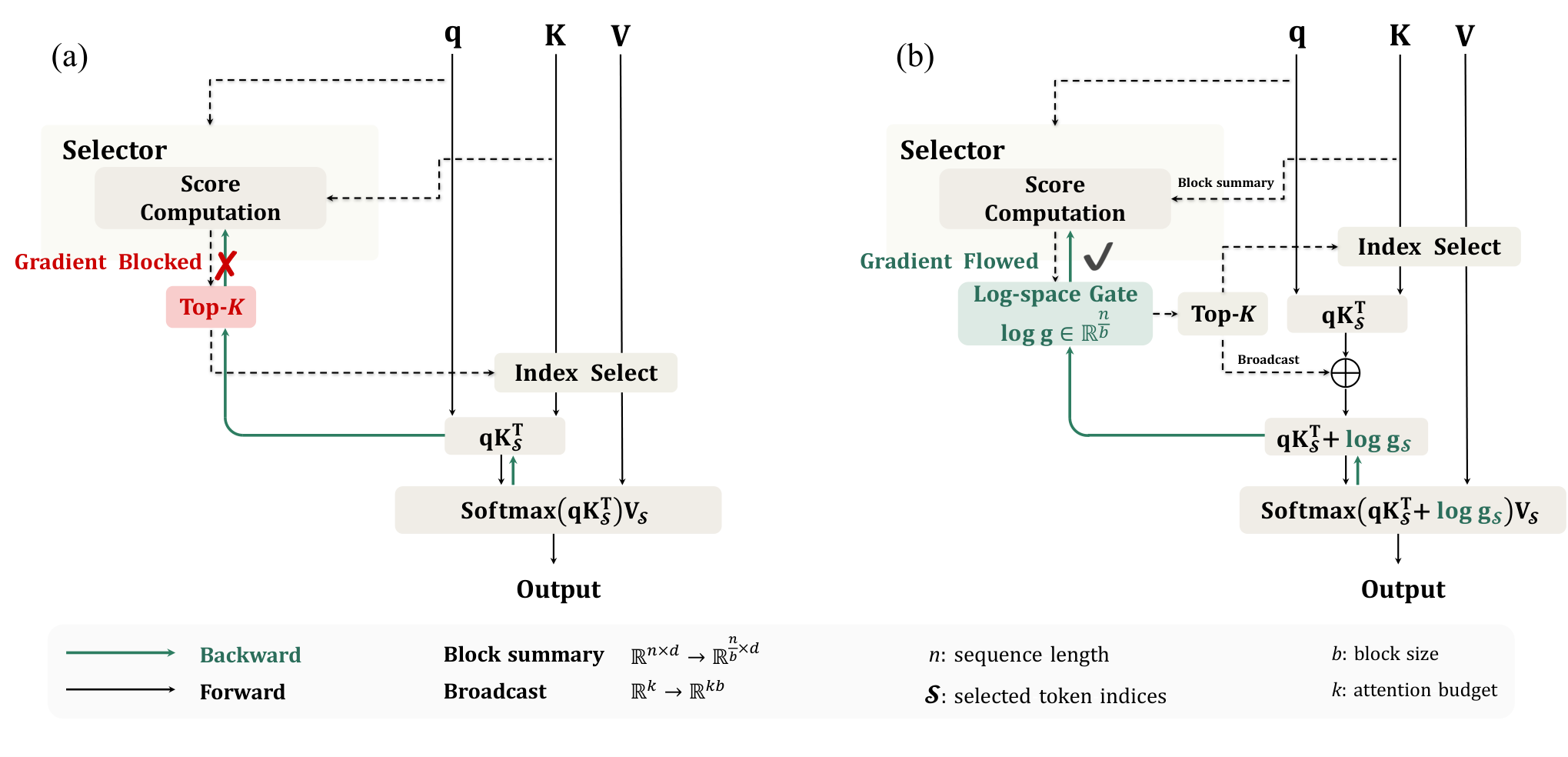
Figure 1 — Gradient Blockage 및 미분 가능한 Gating
⚠️ 알림: 이 리뷰는 AI로 작성되었습니다.
관련 포스트
- [논문리뷰] Φ-Bench: Can Large Language Models Engineer the Infrastructure That Powers Them?
- [논문리뷰] Sol-Attn: Accelerating Video Generation Inference via On-the-Fly Attention Sparsification
- [논문리뷰] Color Pass-Through via Camera-Display Coupling
- [논문리뷰] Self-Guided Test-Time Training for Long-Context LLMs
- [논문리뷰] Let ViT Speak: Generative Language-Image Pre-training
Review 의 다른글
- 이전글 [논문리뷰] PLC-DPO: Posterior Label Correction in Noisy and Ambiguous Preference Optimization
- 현재글 : [논문리뷰] SAS: Simple Attention Sparsification via End-to-End Optimization of Context Ranking
- 다음글 [논문리뷰] SNAP3D: Physically Grounded 3D Parts for Assembly from a Single Image
댓글