[논문리뷰] Hard Vision, Easy Vision: What GPT-6 Astra Reveals Across Computer Vision
링크: 논문 PDF로 바로 열기
저자: Hanoona Rasheed, Mohammed Irfan Kurpath, et al.
1. Key Terms & Definitions (핵심 용어 및 정의)
- Frontier general-purpose systems: 시각, 언어 등 다양한 모달리티에 걸쳐 광범위한 태스크를 단일 인터페이스를 통해 처리하도록 설계된 AI 모델들을 지칭하며, GPT-6 Astra, Gemini 등이 대표적입니다.
- Specialist models: 특정 컴퓨터 비전 태스크(예: 특정 객체 감지, depth estimation)를 위해 특별히 훈련되거나 설계된 전용 AI 모델입니다.
- Visual reasoning: 단순한 인식(recognition)을 넘어 논리적, 수학적, 과학적 이해를 요구하는 복잡한 문제 해결을 위해 시각 정보를 해석하는 AI 시스템의 capability입니다.
- Structured prediction: 출력이 단일 레이블이 아닌 bounding box, pixel mask, 3D reconstruction과 같은 복잡한 구조를 가지는 태스크를 의미합니다.
- Reference levels: 전용 specialist model, 이전 state-of-the-art(SOTA) generalist model, 또는 인간 성능을 기준으로 설정된 벤치마크 성능으로, frontier 시스템의 성능을 비교하는 데 사용됩니다.
2. Motivation & Problem Statement (연구 배경 및 문제 정의)
본 연구는 frontier general-purpose systems의 부상에 따른 컴퓨터 비전 분야의 변화하는 landscape를 이해하는 것을 핵심 문제로 다룹니다. 기존에는 dedicated computer-vision models이 처리했던 태스크들로 general-purpose systems의 capabilities가 빠르게 확장되면서, 이러한 시스템들의 시각적 도달 범위가 어디까지인지, 그리고 어떤 태스크들이 여전히 hard로 남아있는지에 대한 근본적인 질문이 제기되었습니다. 기존의 벤치마크들은 시각 태스크에 대한 광범위한 평가를 제공하지만, 그 결과들이 여러 태스크, 도메인, 모델 비교에 걸쳐 분산되어 있어 개별적인 발전이 컴퓨터 비전 전체에 미치는 의미를 종합적으로 파악하기 어려웠습니다. 특히, generalist model이 다른 generalist보다 우수하더라도 specialist나 인간 성능에는 크게 못 미칠 수 있다는 한계점이 있었습니다. 이에 따라, 이 연구는 frontier general-purpose vision의 폭과 한계를 체계적으로 연구하여 specialized models의 변화하는 역할, 상당한 headroom이 남아있는 capabilities를 명확히 하고, 향후 컴퓨터 비전 연구가 가장 큰 영향을 미칠 수 있는 도전 과제를 제시하고자 합니다.
3. Method & Key Results (제안 방법론 및 핵심 결과)
본 논문은 GPT-6 Astra를 포함한 6개의 frontier general-purpose AI systems를 9개 영역에 걸친 34개 capabilities 및 55개 벤치마크에서 평가하는 방법론을 제안합니다. 이 시스템들의 성능은 적절한 reference levels이 있는 경우 dedicated models 및 human 성능과 비교됩니다. 평가는 semantic understanding부터 precise structured prediction 및 task execution까지 광범위한 시각적 capabilities를 포괄합니다.
주요 실험 결과에 따르면, GPT-6 Astra는 visual 및 spatial reasoning에서 다른 frontier systems 대비 상당한 성능 향상을 보였습니다. 특히 visual logical reasoning에서 +13.6 포인트, 3D & multiview reasoning에서 +12.4 포인트의 우위를 달성했으며, structured prediction 분야에서도 video segmentation에서 +26.6 포인트, pose estimation에서 +22.7 포인트, image segmentation에서 +10.4 포인트, 3D visual grounding에서 +10.7 포인트의 높은 성능을 나타냈습니다 [Table 1 참조]. Semantic interpretation, reasoning, object-centric prediction과 관련된 capabilities는 available reference levels에 근접하거나 도달했습니다. 예를 들어, GPT-6 Astra는 2D object detection에서 specialist performance를 +10.7 포인트 초과하고, segmentation에서 +4.3 포인트 초과했습니다. 반면, metric geometric accuracy (예: depth estimation에서 0.63(↓) 대 specialist 0.44(↓)), faithful reconstruction (예: image restoration에서 17.7 dB 대 specialist 30.7 dB), temporally consistent dense prediction (예: video segmentation에서 최고의 frontier model조차 dedicated model보다 7.9 포인트 낮음), 또는 specialized fine-grained visual knowledge (예: microscopy & pathology에서 23.8% 대 human 82.0%)를 요구하는 태스크에서는 여전히 큰 격차가 존재합니다 [Figure 9 참조]. 추가 reasoning 및 specialist tools 활용은 일부 격차를 줄일 수 있지만, task-dependent하며 상당히 높은 inference cost (최대 13.22배)가 수반될 수 있습니다. Tool use는 modest additional cost (1.04-1.20배)로 성능 향상을 제공할 수 있습니다.
4. Conclusion & Impact (결론 및 시사점)
본 연구는 GPT-6 Astra를 포함한 language-model-driven general-purpose systems가 컴퓨터 비전 landscape 전반에 걸쳐 capability를 크게 확장했음을 결론짓습니다. 이러한 시스템들은 semantic interpretation, reasoning, object-centric prediction 태스크에서 성공적으로 작동하며, 많은 경우 specialist reference levels에 도달하거나 초과하는 성능을 보입니다. 그러나 정확한 metric geometry, faithful reconstruction, temporally consistent dense prediction, 또는 specialized fine-grained visual knowledge를 요구하는 태스크에서는 여전히 substantial gap이 남아 있어 "hard vision" 영역으로 분류됩니다. 이 연구는 generalist와 specialist capabilities 간의 경계를 재정의하며, general-purpose interfaces를 통해 점점 더 정교한 visual tasks에 접근할 수 있게 되었지만, 정밀하고 fidelity-sensitive한 perception은 여전히 specialist models과 미래 연구의 중요한 frontier임을 시사합니다.
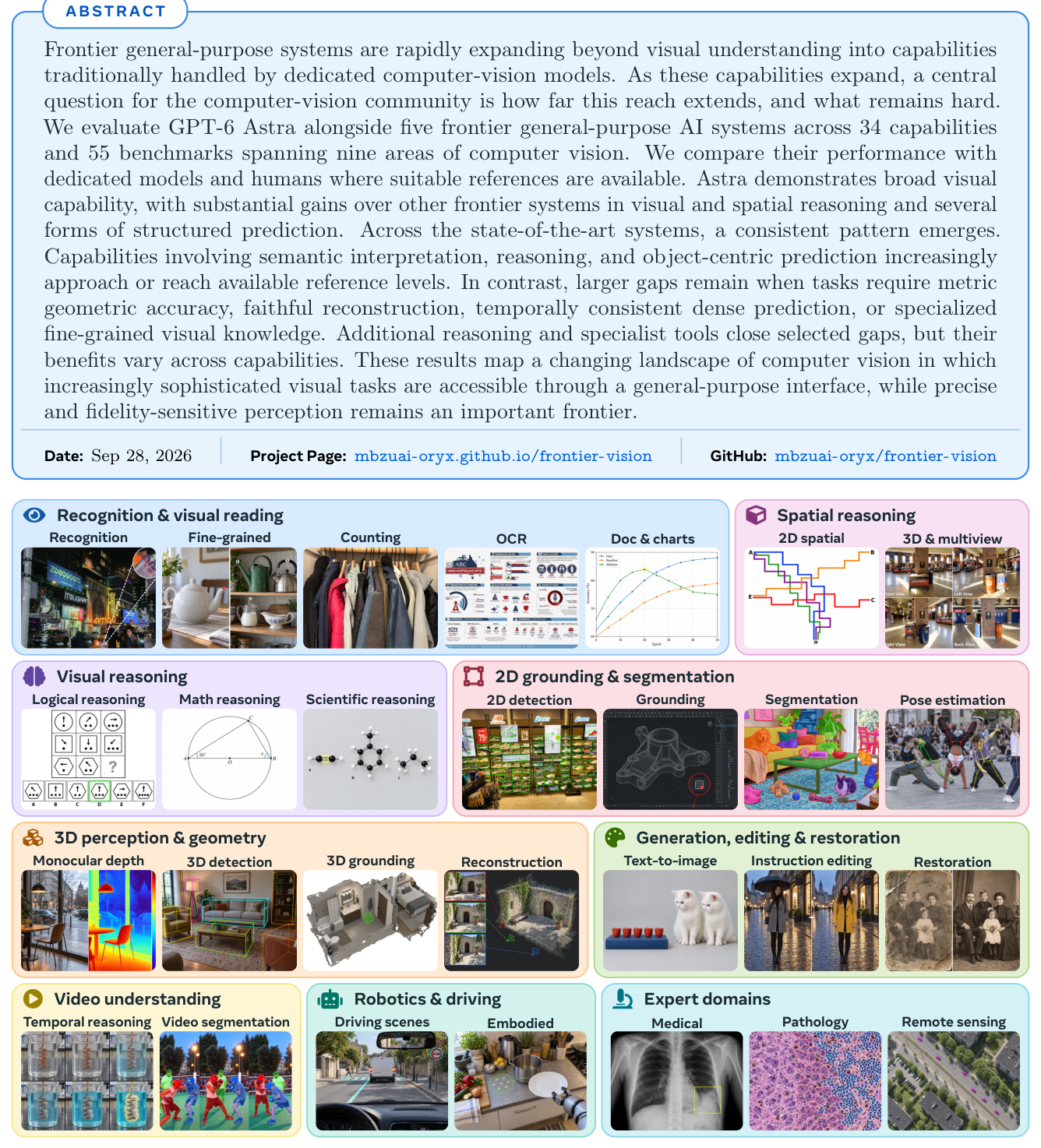
Figure 1 — 연구의 scope와 평가 대상인 34가지 컴퓨터 비전 capability를 시각적으로 보여주는 핵심 프레임워크 다이어그램
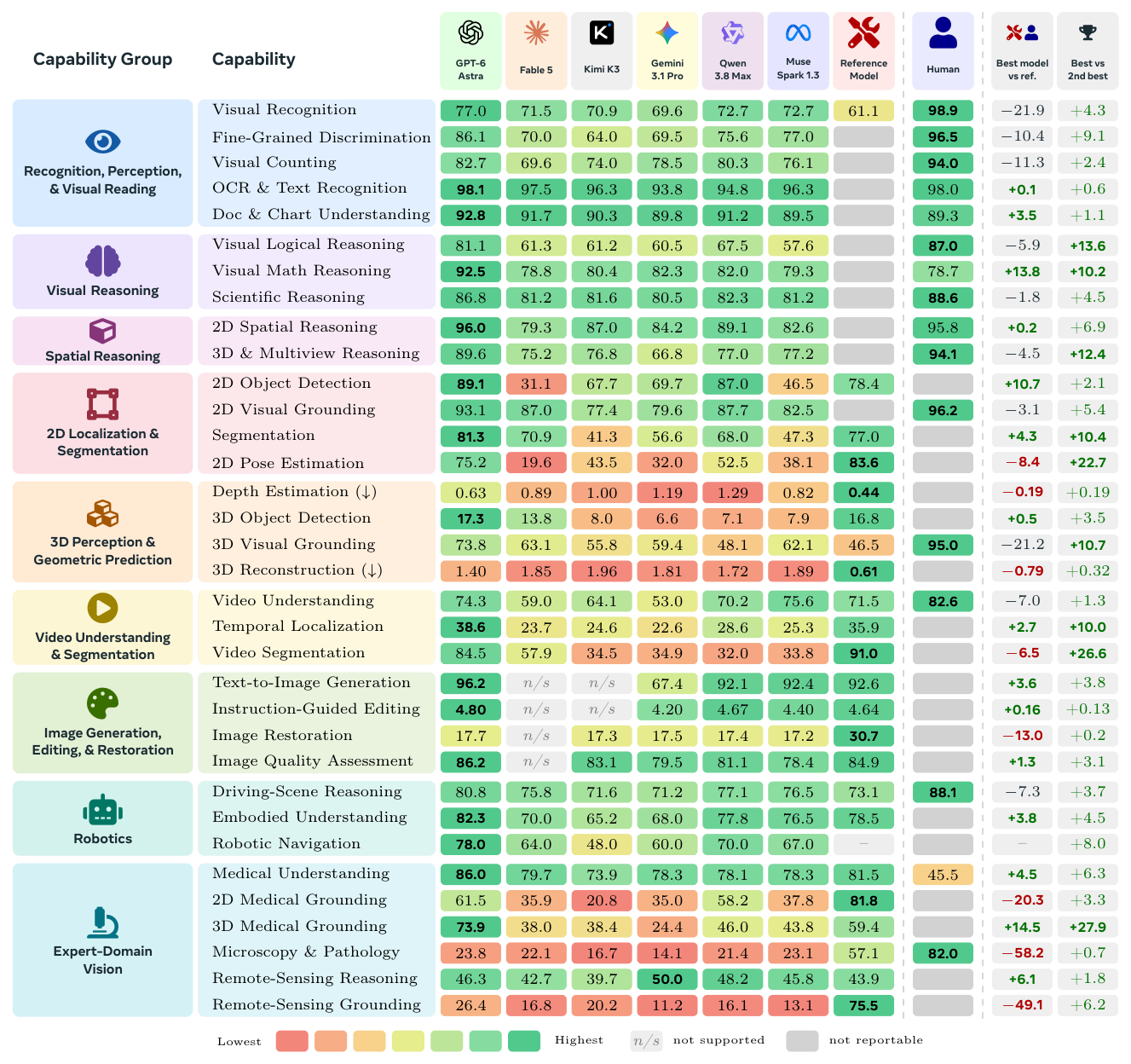
Table 1 — GPT-6 Astra를 포함한 6개 frontier 시스템의 34개 capability별 성능을 specialist 모델 및 인간 성능과 비교한 핵심 정량적 결과 테이블
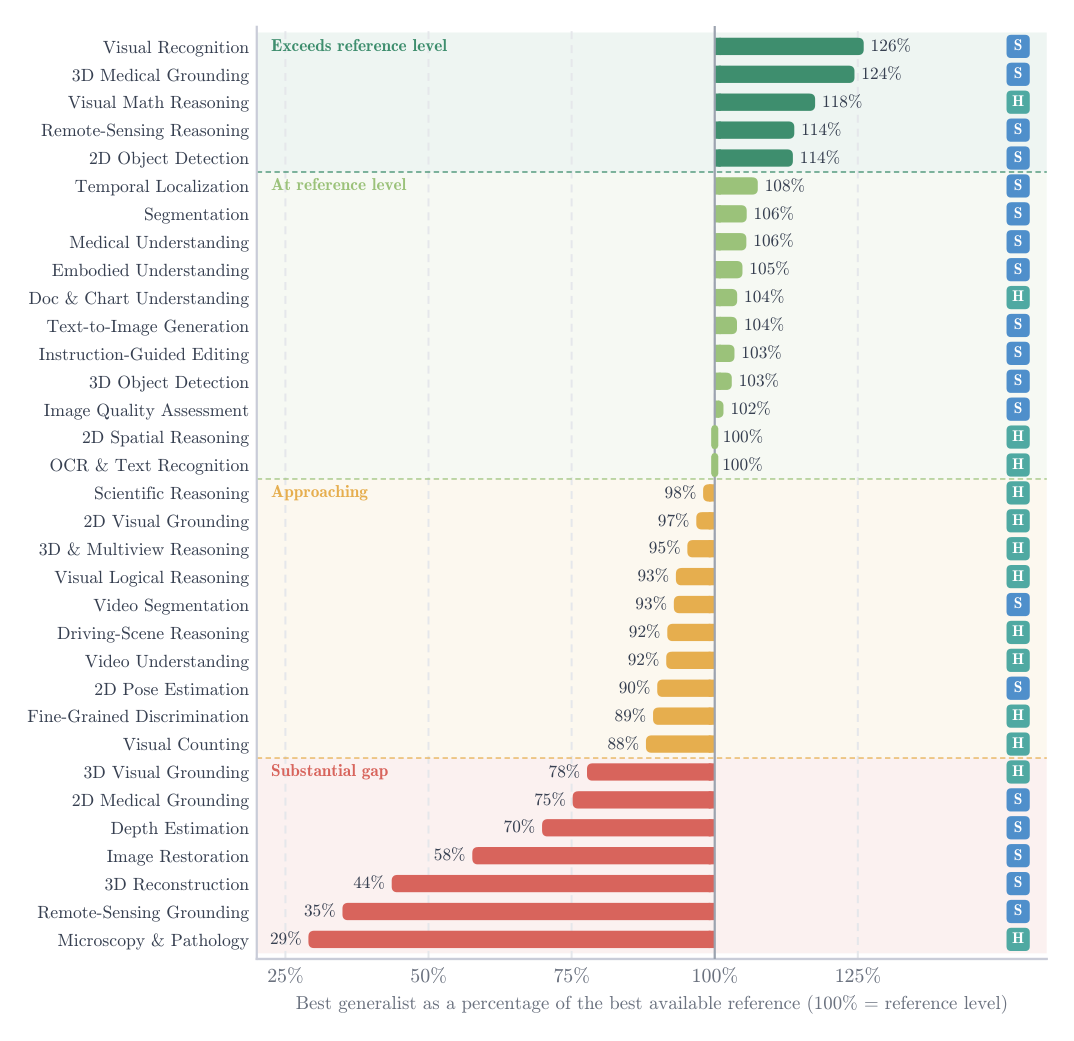
Figure 9 — 각 capability의 maturity 수준(reference 대비)을 시각적으로 분류하여 frontier 시스템의 강점과 약점을 종합적으로 보여주는 그래프
⚠️ 알림: 이 리뷰는 AI로 작성되었습니다.
관련 포스트
- [논문리뷰] Computational Humor with Multimodal LLMs: Methods, Datasets, Evaluation, and Challenges
- [논문리뷰] Imagination Helps Visual Reasoning, But Not Yet in Latent Space
- [논문리뷰] AdaReasoner: Dynamic Tool Orchestration for Iterative Visual Reasoning
- [논문리뷰] BabyVision: Visual Reasoning Beyond Language
- [논문리뷰] CogFlow: Bridging Perception and Reasoning through Knowledge Internalization for Visual Mathematical Problem Solving
Review 의 다른글
- 이전글 [논문리뷰] Groupwise Agentic Grading and Advantage Redistribution for Code Agent RL
- 현재글 : [논문리뷰] Hard Vision, Easy Vision: What GPT-6 Astra Reveals Across Computer Vision
- 다음글 [논문리뷰] How Far Are We from Removing the Visual Encoder? Scaling Laws for Encoder-Free Multimodal Pretraining
댓글