[논문리뷰] 3DCodeVerse: Exploring 3D Worlds as Code
링크: 논문 PDF로 바로 열기
저자: Yipeng Gao, Ziyao Zeng, Jinfa Huang, et al.
1. Key Terms & Definitions (핵심 용어 및 정의)
- 3D Coding: 실행 가능한 프로그램 코드를 사용하여 3D geometry를 구성하고, articulated motion을 정의하며, scene을 조합하고, graphics effects를 생성하는 3D 콘텐츠 생성 접근 방식.
- 3DCodeVerse-2M: 정적 객체, articulated asset, scene, graphics를 아우르는 대규모의 통합된 executable 3D 프로그램 corpus.
- 3DCodeVerse Harness: multi-agent Directed Acyclic Graph (DAG) 프레임워크를 사용하여 3D 프로그램을 합성하고 정제하며, human feedback 없이 자동화된 평가 및 수정을 지원하는 시스템.
- Automated Feedback: 3DCodeVerse Harness 내에서 프로그램 execution checks, spatial measurements, rubric-guided VLM judgments를 통해 생성된 코드의 결함을 식별하고 targeted revision을 안내하는 자동화된 메커니즘.
- Executable Program: 선언된 환경(예: Blender Python, CadQuery)에서 실행되어 3D artifact를 생성할 수 있으며, 필요한 모든 source files 및 assets를 포함하는 자체 포함된 코드.
2. Motivation & Problem Statement (연구 배경 및 문제 정의)
3D coding은 executable program을 통해 3D geometry, articulated motion, scene composition, graphics effects를 생성함으로써 편집 및 재사용 가능한 3D 콘텐츠를 대규모로 만들 수 있는 유망한 접근 방식을 제공한다. 그러나 3D coding 시스템 개발 및 평가를 위한 shared infrastructure가 부족하며, 기존 리소스들은 3D modeling의 특정 측면(예: CAD construction, Blender scripting, visual feedback을 통한 refinement)에 파편화되어 있다. 특히, 기존 데이터셋은 주로 static 또는 articulated objects에 초점을 맞추고 있으며, harness들은 visual assessment 및 automated corpus construction 지원이 다양하다. 이러한 fragmented resources는 3D coding agents의 확장 가능한 학습 및 평가를 어렵게 하며, 이것이 본 연구에서 3DCodeVerse가 해결하고자 하는 핵심 문제이다.
3. Method & Key Results (제안 방법론 및 핵심 결과)
본 논문은 대규모 executable code corpus와 3D code generation harness를 통해 3D coding의 학습 및 확장을 위한 3DCodeVerse라는 오픈소스 foundational framework를 제안한다. 제안하는 방법론은 크게 두 가지 핵심 구성 요소로 나뉜다: 3DCodeVerse-2M 데이터셋과 3DCodeVerse Harness. 3DCodeVerse-2M은 DeepCAD construction sequences를 CadQuery 프로그램으로 변환하고, Articraft geometry routines를 인라인하며, URDF articulation specifications를 보존하는 등, 이질적인 3D representation을 재사용 가능한 source code로 체계적으로 변환하여 구축된 2M 규모의 통합 corpus이다 [Figure 2, cite: 1]. 각 프로그램은 associated assets, textual descriptions, provenance, verification records와 함께 제공된다.
3DCodeVerse Harness는 텍스트, 이미지 또는 비디오로부터 복잡한 3D 프로그램을 합성하고 정제하기 위한 multi-agent Directed Acyclic Graph (DAG) 프레임워크이다 [Figure 3, cite: 1]. 이 harness는 multi-component projects를 coding 및 assembly tasks의 DAG로 분해하여 여러 agents가 structured 방식으로 source files를 개발하고 통합할 수 있게 한다. 생성된 프로그램은 실행 및 렌더링된 후, 독립적인 judge agent가 explicit acceptance criteria에 대해 출력을 평가한다. Execution checks, spatial measurements, visual feedback을 포함하는 자동화된 피드백 메커니즘은 human intervention 없이 iterative execution–evaluation–revision cycles를 가능하게 한다.
실험 결과, 3DCodeVerse-2M 데이터셋으로 fine-tuning된 open models은 3D coding capabilities에서 상당한 향상을 보였다. 특히, Qwen3.5-9B 모델은 3DCodeBench에서 fine-tuning 전 0.0%였던 execution rate가 84.9%로 크게 향상되었으며, Qwen3.8-27B 모델은 51.9%에서 92.9%로 증가했다. 또한, 3DCodeVerse Harness는 기존 coding agents의 생성 품질을 일관되게 향상시켜, one-shot generation 대비 15.5~29.1점의 Judge Score 상승을 달성했다. 특히, Claude Opus 5.5를 backbone으로 사용했을 때, 3DCodeVerse Harness는 Claude Design (3D Object) 대비 90%의 Human Preference win rate를 기록하며 우수한 성능을 입증했다 [Figure 4, cite: 1].
4. Conclusion & Impact (결론 및 시사점)
본 논문은 3D coding을 위한 오픈 에코시스템인 3DCodeVerse를 제시한다. 이 시스템은 datasets, reusable harness, open model baselines를 통해 3D coding의 공유 기반을 제공한다. 3DCodeVerse는 3D 콘텐츠 생성의 확장성, 제어 가능성 및 접근성을 향상시키는 데 중요한 영향을 미친다. 특히, 이 연구는 robotics 분야에서 시뮬레이션된 로봇 작업을 위한 articulated assets 및 scenes의 생성을 가능하게 하여, 명시적인 geometry 및 physical constraints를 통한 제어를 제공한다. 또한, 3D coding은 video generation에서 장면 레이아웃, 객체 articulation 및 motion, 카메라 궤적을 제어하는 편집 가능한 인터페이스를 제공함으로써, explicit scene program과 비디오 합성을 연결하는 중요한 시사점을 가진다. 3DCodeVerse는 3D 생성 분야의 연구 발전을 촉진하는 재사용 가능한 인프라를 제공하며, 데이터 구축, 프로그램 합성, 검증, 정제 및 모델 개선을 연결하는 closed loop를 구축한다.
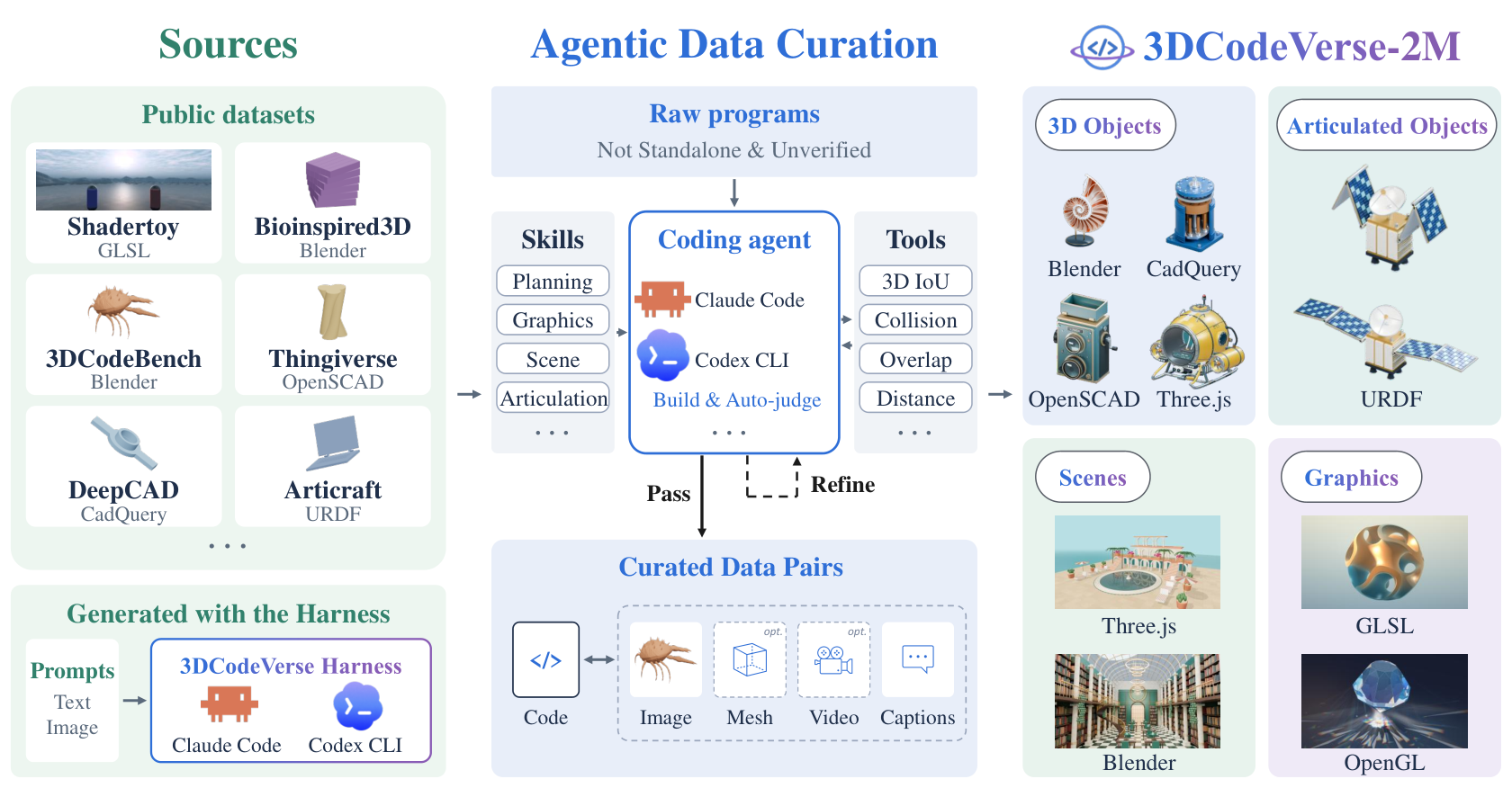
Figure 2 — 3DCodeVerse-2M 데이터셋 구성
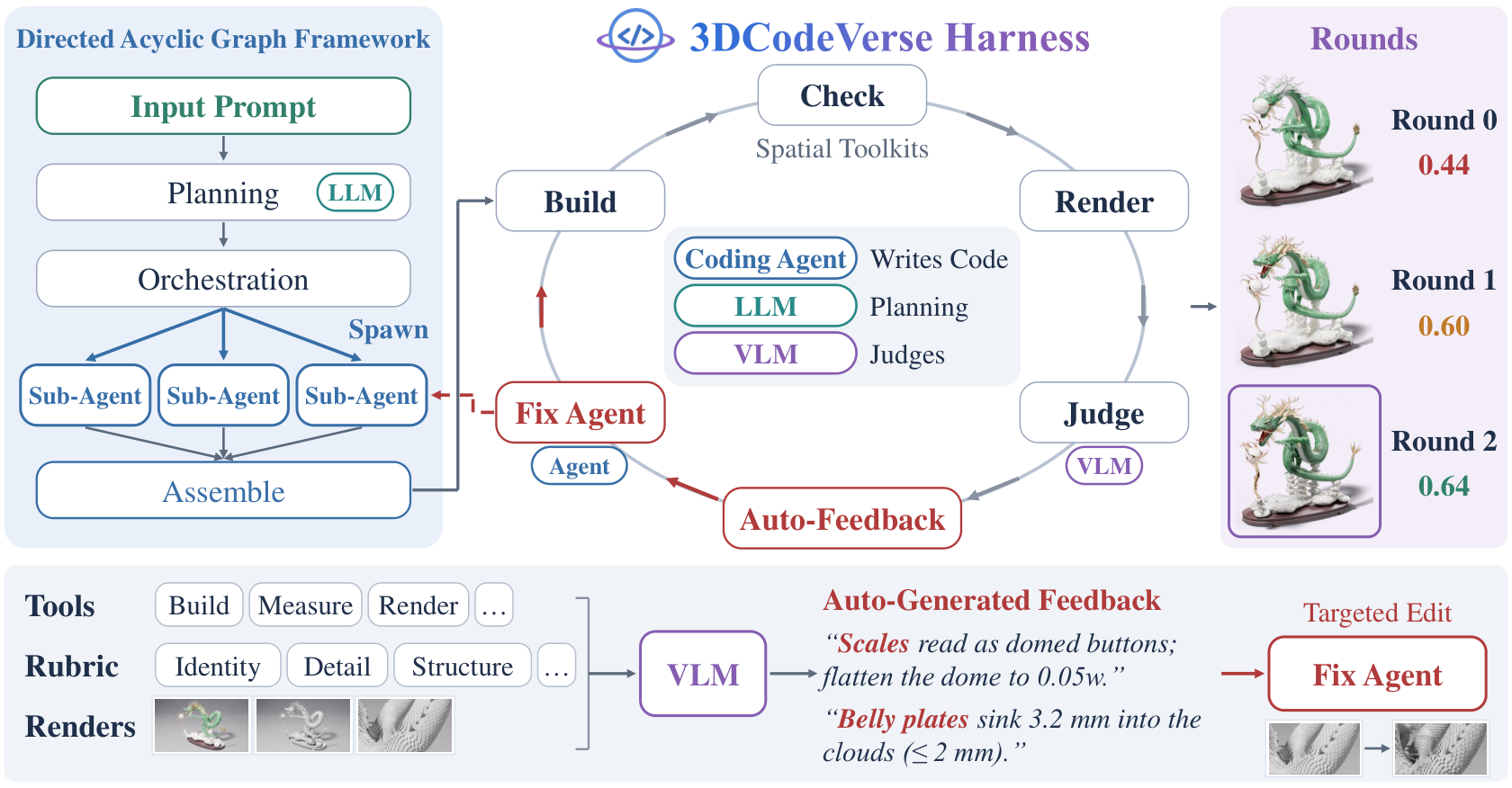
Figure 3 — 3DCodeVerse Harness 개요
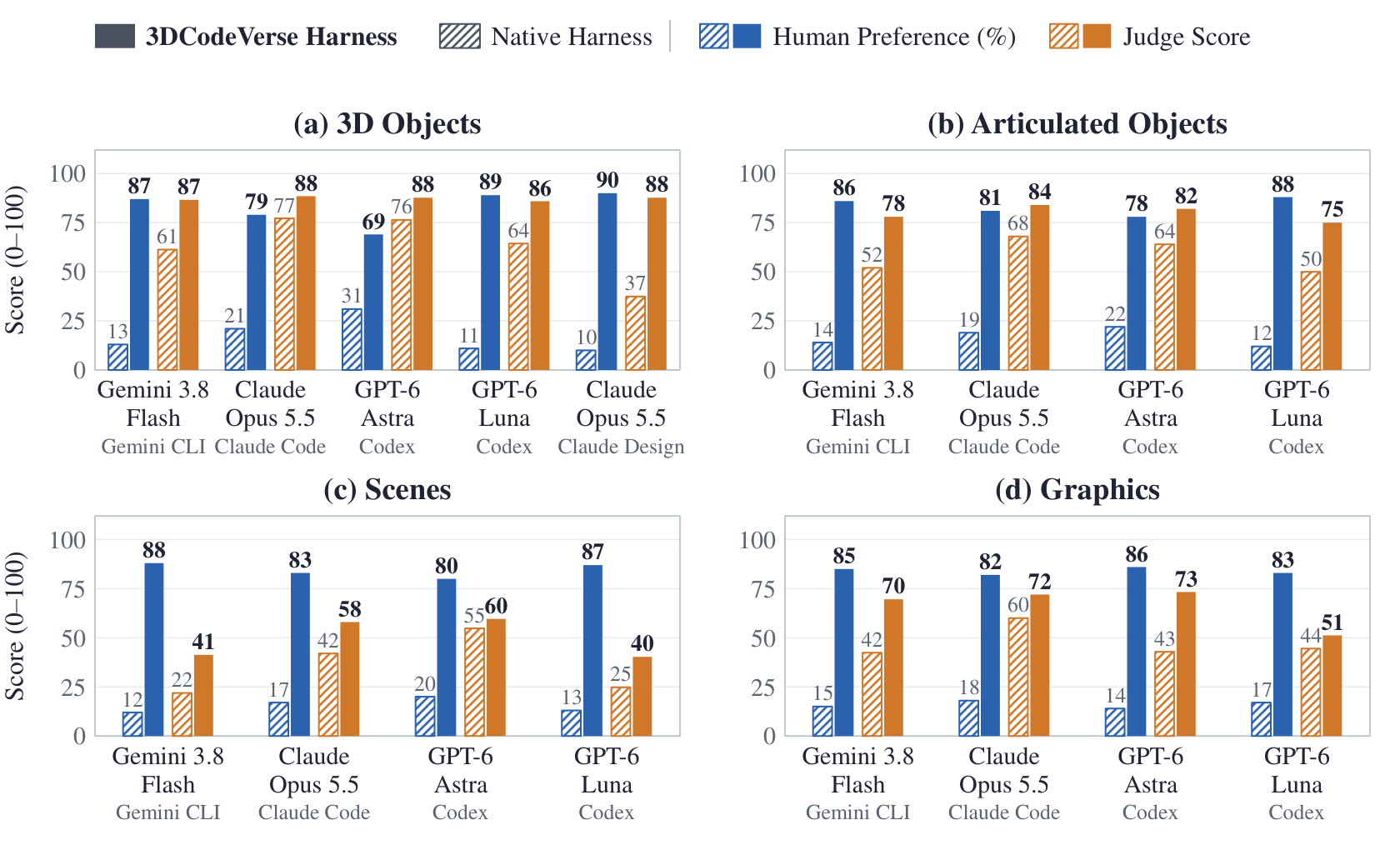
Figure 4 — 핵심 3D 코딩 작업 결과
⚠️ 알림: 이 리뷰는 AI로 작성되었습니다.
관련 포스트
- [논문리뷰] Numina-Lean-Agent: An Open and General Agentic Reasoning System for Formal Mathematics
- [논문리뷰] Reasoning Models Generate Societies of Thought
- [논문리뷰] DeepSeekMath-V2: Towards Self-Verifiable Mathematical Reasoning
- [논문리뷰] The Collaboration Gap
- [논문리뷰] Magentic Marketplace: An Open-Source Environment for Studying Agentic Markets
Review 의 다른글
- 이전글 [논문리뷰] τ-Emotion-Bench: Exposing the Interaction Fragility of LLM Agents through Real-World User Emotions
- 현재글 : [논문리뷰] 3DCodeVerse: Exploring 3D Worlds as Code
- 다음글 [논문리뷰] Athanor: An Agent-Native System for Autonomous Post-Training Research
댓글