[논문리뷰] Knowledge Graph-based Retrieval-Augmented Generation for Schema Matching
링크: 논문 PDF로 바로 열기
저자: Chuangtao Ma, Sriom Chakrabarti, Arijit Khan, Bálint Molnár
1. Key Terms & Definitions (핵심 용어 및 정의)
- KG-RAG4SM: 대규모 외부 Knowledge Graph(Wikidata, UMLS 등)에서 관련 subgraph를 retrieve·rerank한 뒤 이를 LLM prompt에 넣어 schema matching을 수행하는 프레임워크입니다. 별도의 re-training 없이 few-shot in-context learning만 사용합니다.
- Vector-based KG Triple Retrieval: KG triple을 RoBERTa 기반 embedding으로 offline 인코딩해 ChromaDB(HNSW index)에 저장합니다. 이후 question embedding과의 cosine similarity로 top-k triple을 검색합니다.
- Vector-based Entity Retrieval + BFS: vector search로 seed entity를 찾고, entity pair 간 최대 3-hop path를 BFS로 탐색합니다. BFS는 local in-memory 방식(Wikidata5M) 또는 remote SPARQL 방식(full Wikidata)으로 수행됩니다.
- Ranking-based Retrieval Refinement: 검색된 path/triple을 relation frequency(path length로 정규화) 또는 cosine similarity로 rerank하여 top-1/top-2만 남기는 pruning 기법입니다. Context poisoning을 완화하는 역할을 합니다.
- Rule-based Instruction Tuning (Poorly-relevant Subgraph Exclusion): LLM이 KG context와 question 간 relevance score(0~10)를 먼저 매기게 합니다. score가 7 이상일 때만 KG context를 활용하도록 지시하는 prompt 기반 필터링입니다.
2. Motivation & Problem Statement (연구 배경 및 문제 정의)
본 논문은 기존 similarity-, PLM-, LLM-based schema matching이 commonsense·domain knowledge 부족으로 semantic ambiguity를 해결하지 못하는 문제를 다룹니다. 이를 위해 대규모 외부 KG를 LLM에 grounding하는 방법을 제안합니다.
- 기존 방법의 한계: similarity 기반 방법은 surface-level 유사도에 의존하므로 synonym, abbreviation, 서로 다른 terminology를 잡아내지 못합니다. 예를 들어
ATTEND_DOCTOR와provider_id같은 complex mapping을 놓칩니다. - LLM의 한계: background knowledge가 없으면 LLM은 hallucination을 일으킵니다.
- 기존 Graph RAG/KG-RAG의 한계: text chunk로 만든 소규모 self-constructed graph나 KGQA dataset 내부 KG를 사용합니다. 그러나 schema matching에 필요한 지식은 billion 단위 triple을 가진 외부 대규모 KG에 존재합니다.
- 핵심 기술 과제: 대규모 KG는 LLM context length 제한 때문에 직접 투입할 수 없고, 무관한 지식은 context poisoning을 유발합니다. 따라서 관련 subgraph를 효과적이고 효율적으로 retrieve하는 것이 핵심입니다.
3. Method & Key Results (제안 방법론 및 핵심 결과)
KG-RAG4SM은 다음 세 단계로 동작합니다 [Figure 3].
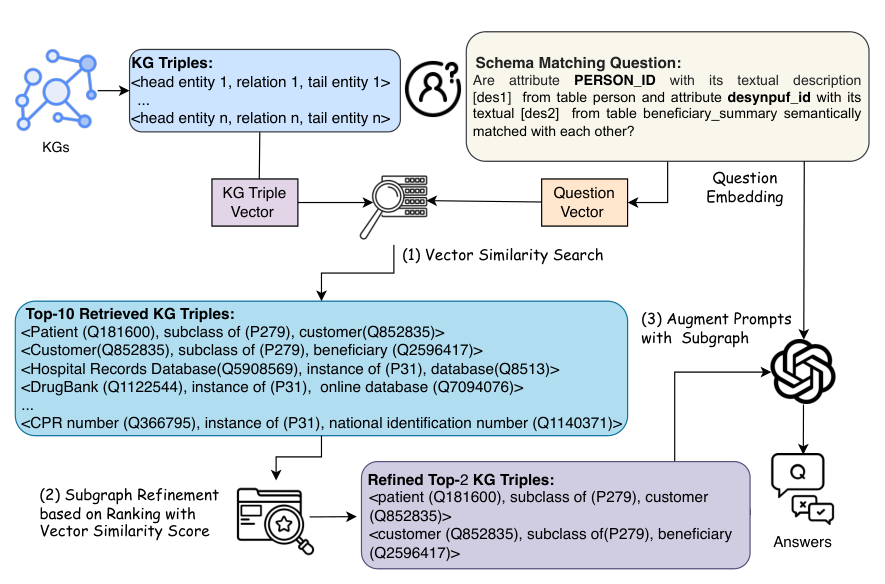
Figure 3 — 전체 KG-RAG4SM 파이프라인을 보여주는 핵심 아키텍처 다이어그램
- 각 candidate matching pair를 binary question(Yes/No)으로 변환합니다.
- LLM-based, vector-based, BFS-based, hybrid retrieval 중 하나로 KG에서 관련 subgraph를 추출합니다.
- ranking 기반 refinement로 top-1/top-2 path만 남겨 semi-structured text 형태로 prompt에 삽입합니다.
LLM-based retrieval은 hallucination으로 존재하지 않는 entity를 반환할 수 있고, domain-specific KG에는 잘 작동하지 않습니다. 그래서 최종적으로 Vector-based KG Triple Retrieval과 Vector-based Entity Retrieval + BFS 두 pipeline이 가장 우수한 것으로 정리됩니다. Embedding은 RoBERTa-base(768-dim)를 사용하며, KG는 주로 Wikidata5M(약 4.6M entity, 20.6M triple)을 활용합니다.
LLM 대비 성능 [Table 5]
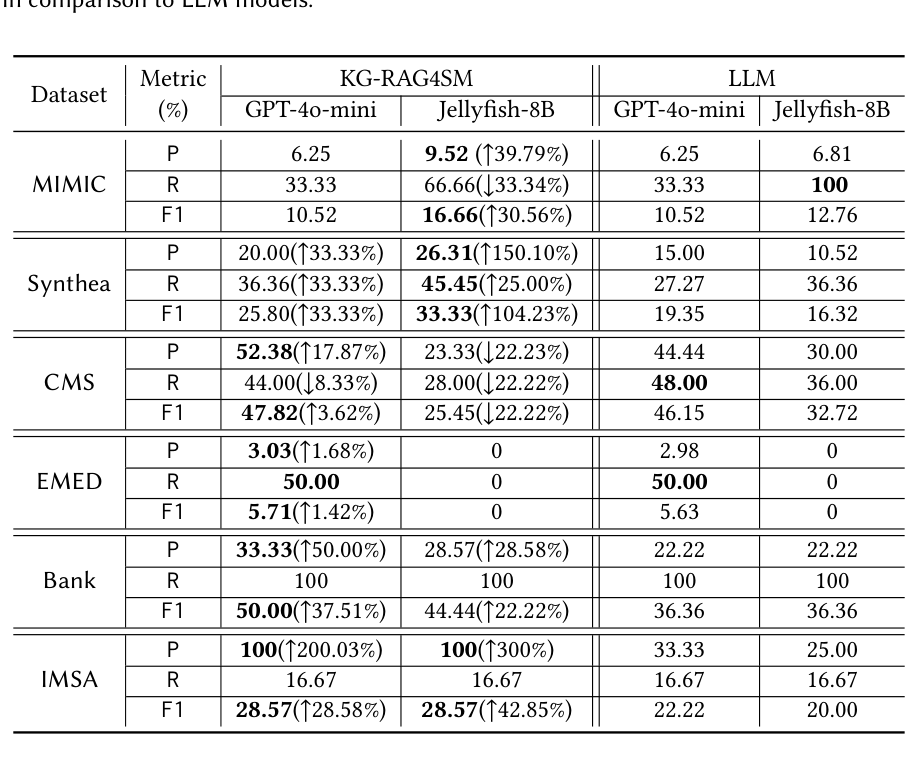
Table 5 — 6개 데이터셋에서 LLM baseline 대비 핵심 성능 향상 결과
- Jellyfish-8B backbone 기준:
- MIMIC: P 39.79%, F1 30.56% 향상
- Synthea: P 150.10%, F1 104.23% 향상
- IMSA: P 300% 향상
- GPT-4o-mini backbone 기준:
- CMS: P 17.87% 향상
- Bank: F1 37.51% 향상
- 예외로 Jellyfish-8B는 CMS에서 성능이 하락했습니다. 저자들은 원인을 fine-tuned model의 knowledge conflict로 해석합니다.
PLM 대비 성능
- Synthea에서 SMAT 대비 P 69.20%, F1 21.99% 향상을 보였습니다.
- SMAT과 Unicorn(trained)은 recall 100%에 가깝지만, 대부분을 positive로 예측하는 overfitting 경향을 보입니다.
- 다만 fine-tuned Unicorn은 Bank·IMSA에서 더 높은 F1을 기록했습니다.
Ranking refinement 효과 (CMS, GPT-4o-mini)
- Entity Retrieval + BFS의 top-1 ranked 설정이 F1 55.31%로 가장 높았습니다.
- ranking을 적용하지 않은 W/O Rank 설정은 F1 38.09%에 그쳤습니다.
ArchRAG 대비 성능 [Table 13]
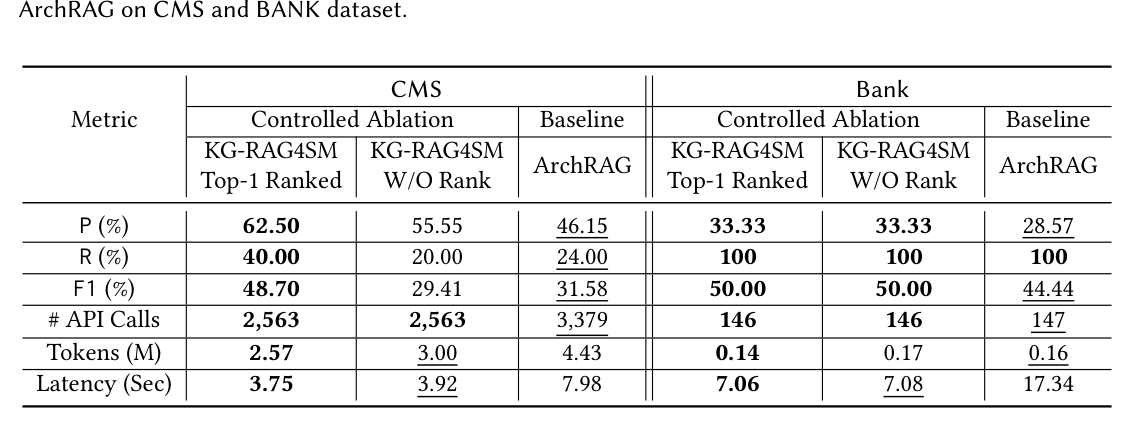
Table 13 — Ranking refinement 기여도 및 SOTA GraphRAG 대비 성능·비용 우위
- CMS에서 KG-RAG4SM top-1은 F1 48.70%를 기록해 ArchRAG(31.58%)를 앞섰습니다.
- 동시에 token 사용량은 2.57M vs 4.43M, latency는 3.75s vs 7.98s로 더 효율적이었습니다.
효율성
- 질문당 generation time은 약 0.5~0.6s로, LLM 단독보다 오히려 약간 빠릅니다.
- PLM training(수천 초)이 필요하지 않습니다.
- Local in-memory BFS는 remote SPARQL 대비 약 15× 빠릅니다(5.47s vs 83.77s).
추가 분석
- Backbone 비교: GPT-4o-mini(F1 47.82%)가 GPT-4o(33.33%)보다 우수했습니다. 저자들은 대형 모델일수록 내부 지식과 retrieved knowledge 간 conflict가 커진다고 해석합니다.
- KG 비교: Synthea 전체에서는 UMLS가 Wikidata보다 열세였습니다. 그러나 rule-based IT를 적용하면 UMLS + Jellyfish-8B의 F1이 24.24% → 40.00%(65.01% 향상)로 개선됩니다.
- Domain 용어 subset: healthcare 전문 용어가 많은 160개 question에서는 UMLS가 Wikidata보다 우수했습니다(F1 42.86 vs 30.77).
4. Conclusion & Impact (결론 및 시사점)
KG-RAG4SM은 대규모 외부 KG에서 retrieve·rerank한 compact subgraph로 LLM을 grounding합니다. 이를 통해 re-training 없이 PLM·LLM 기반 SOTA 대비 precision과 F1을 개선하고, schema matching에서의 hallucination을 완화함을 보였습니다.
- 최적 전략: vector-based triple retrieval과 entity retrieval + BFS가 최적의 retrieval 전략으로 확인되었습니다. BFS depth 3은 accuracy와 efficiency 간의 합리적인 trade-off입니다.
- 학술적 기여: KG-RAG를 KGQA 중심에서 data integration 영역으로 확장했습니다. 또한 real-world healthcare dataset인 EMED를 새로 공개했습니다.
- 산업적 시사점: label 없이 EHR 등 이질적 database를 통합하는 실용적 경로를 제시합니다.
- 한계: 절대 성능 수치(예: MIMIC F1 10~17%, EMED F1 5.71%)는 여전히 낮습니다. 또한 retrieval 전략과 KG coverage의 효과가 실험 설계상 분리되지 않았습니다.
- 향후 과제: LLM 내부 지식과 KG 간 knowledge conflict 해결, 그리고 다양한 규모와 connectivity를 가진 KG에 대한 체계적 평가가 남아 있습니다.
⚠️ 알림: 이 리뷰는 AI로 작성되었습니다.
관련 포스트
- [논문리뷰] BubbleRAG: Evidence-Driven Retrieval-Augmented Generation for Black-Box Knowledge Graphs
- [논문리뷰] PersonalAI 2.0: Enhancing knowledge graph traversal/retrieval with planning mechanism for Personalized LLM Agents
- [논문리뷰] CodeGraph: Open-Taxonomy Knowledge Graph for Source Code with Wikidata Grounding
Review 의 다른글
- 이전글 [논문리뷰] JoVox: Joint Hierarchical Flow Matching for Lightweight Voxel Generation
- 현재글 : [논문리뷰] Knowledge Graph-based Retrieval-Augmented Generation for Schema Matching
- 다음글 [논문리뷰] LCM-Promo: An LLM-Based Uplift Model for Promotion Allocation
댓글