[논문리뷰] Natural-Language Agent Harnesses
링크: 논문 PDF로 바로 열기
저자: Linyue Pan, Lexiao Zou, et al.
키워: Natural-Language Agent Harnesses (NLAHs), Intelligent Harness Runtime (IHR), Harness Engineering, Agent Control, Context Engineering, File-backed State, Module Ablation, Multi-agent Orchestration
1. Key Terms & Definitions (핵심 용어 및 정의)
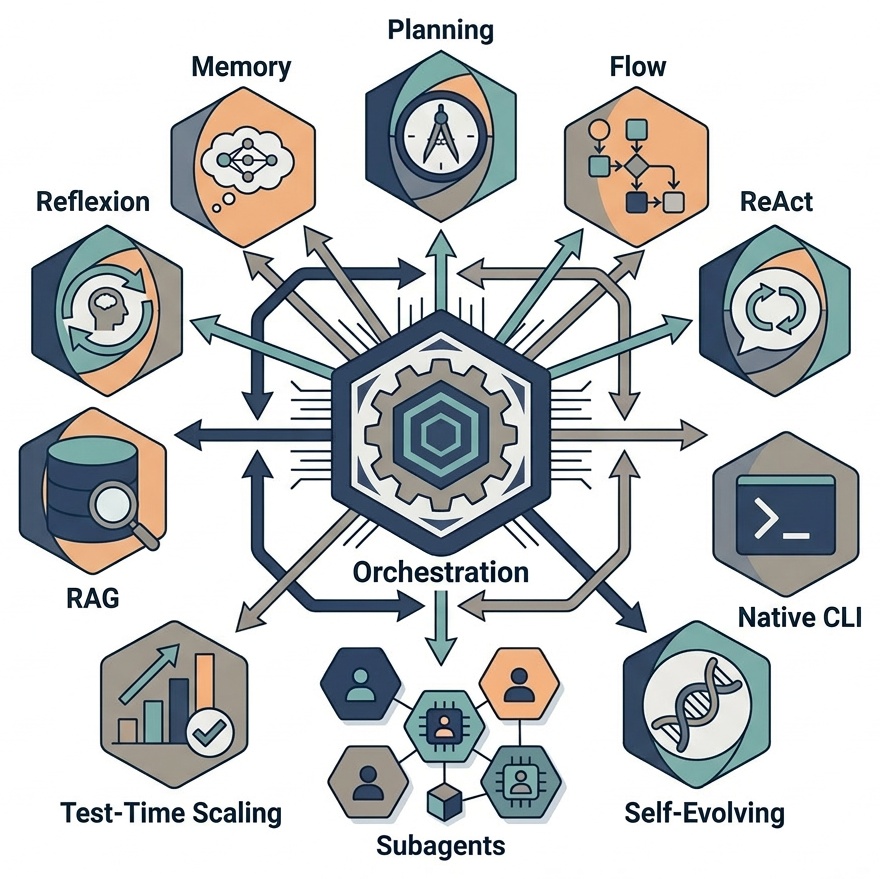
- Harness : Multi-step reasoning, tool use, memory, delegation, 그리고 stopping을 단일 모델 호출(model call) 이상으로 구조화하는 오케스트레이션(orchestration) 레이어를 지칭합니다. [cite: 1, Figure 1]
- Natural-Language Agent Harnesses (NLAHs) : Agent harness의 고수준 제어 로직(high-level control logic)을 편집 가능한 자연어(editable natural language)로 표현한 것입니다.
- Intelligent Harness Runtime (IHR) :
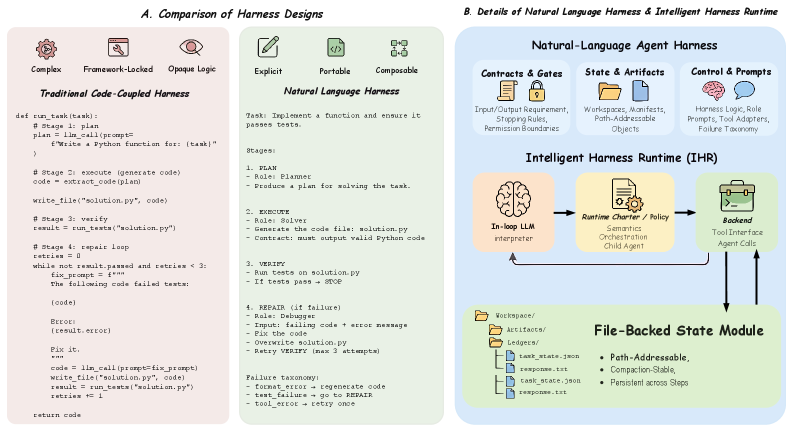
NLAHs를 명시적 계약(explicit contracts), 영구적 아티팩트(durable artifacts), 그리고 경량 어댑터(lightweight adapters)를 통해 실행하는 공유 런타임(shared runtime)입니다. [cite: 1, Figure 2] - Context Engineering : 단일 호출(single call)을 위한 즉각적인 프롬프트(prompt)와 검색된 컨텍스트(retrieved context)를 설계하는 것으로,
harness는 이를 포괄합니다. - File-backed State : 영구적인 상태(durable state)를 경로 지정 가능한 아티팩트(path-addressable artifacts)로 외부에 노출하여 컨텍스트 절단(context truncation) 및 분기(branching) 상황에서의 안정성을 향상시키는 모듈입니다.
2. Motivation & Problem Statement (연구 배경 및 문제 정의)
Agent의 성능은 점점 더 harness engineering에 의존하고 있지만, 기존의 harness 디자인은 컨트롤러 코드와 런타임 특정(runtime-specific) 관습에 파묻혀 있어, 이를 과학적 대상으로 전이(transfer), 비교(compare), 연구(study)하기 어렵다는 문제가 있습니다. 대부분의 Agent 시스템에서 효과적인 harness는 컨트롤러 코드, 숨겨진 프레임워크 기본값(hidden framework defaults), 툴 어댑터(tool adapters), 검증 스크립트(verifier scripts), 그리고 런타임 특정 가정(runtime-specific assumptions) 등 여러 곳에 분산되어 있습니다. 이러한 분산된 harness 로직으로 인해 harness는 런타임 간 전송하기 어렵고, 공정하게 비교하기 어려우며, 깔끔하게 ablation하기 어렵습니다. 기존 연구들은 재사용 가능한 제어 지식(control knowledge) 수준에서 자연어 아티팩트의 가능성을 보여주었으나, harness-wide contracts, role boundaries, state semantics, failure handling, runtime-facing adapters를 명시적이고 실행 가능한 harness 객체로 통합하여 공동으로 실행하는 데는 한계가 있었습니다. 이러한 문제점들이 design-pattern layer를 명시적인 executable natural-language object로 만드는 연구의 필요성을 제기합니다.
3. Method & Key Results (제안 방법론 및 핵심 결과)
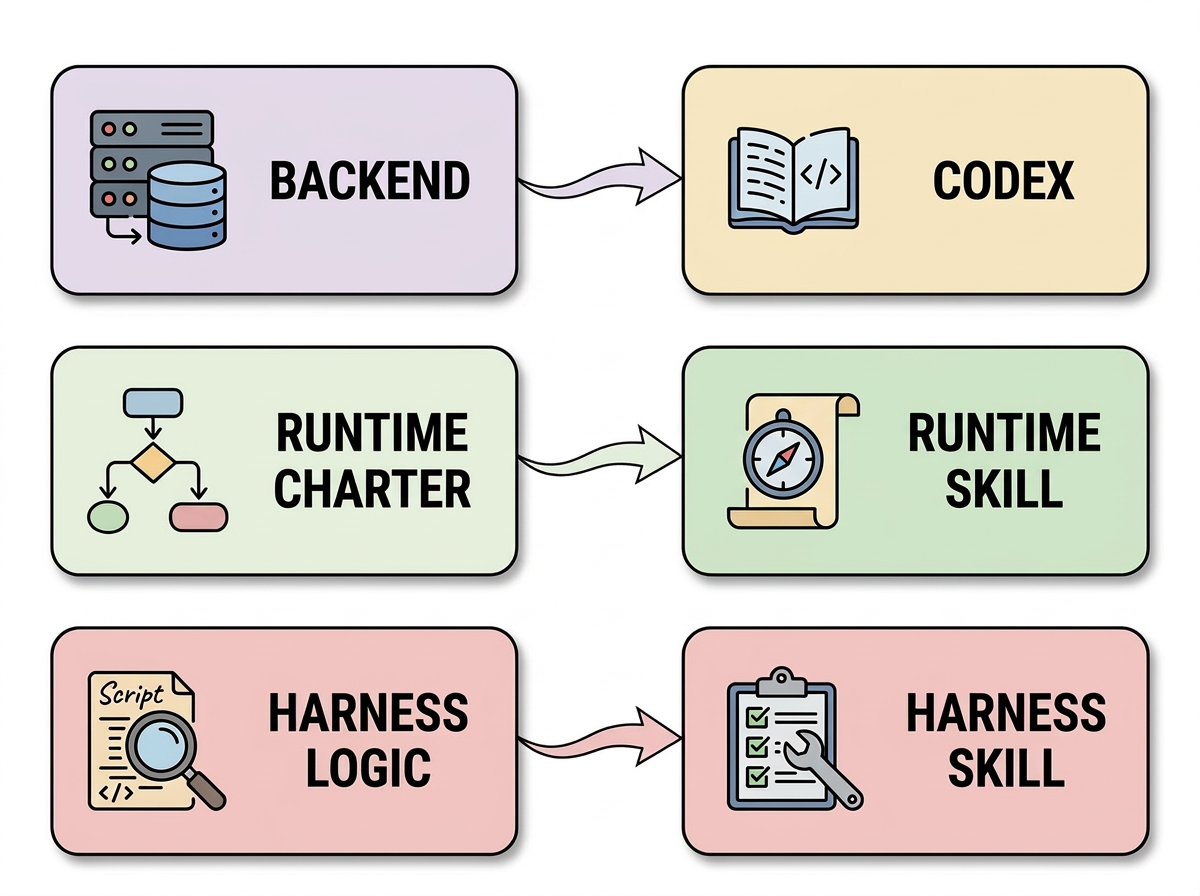
저자들은 agent harness 내의 design-pattern layer를 shared runtime 가정 하에 executable natural-language object로 명시화하고자 Natural-Language Agent Harnesses (NLAHs)와 Intelligent Harness Runtime (IHR)을 제안한다 [cite: 1, Figure 2]. NLAHs는 contracts, roles, stage structure, adapters, scripts, state semantics, failure taxonomy와 같은 핵심 구성 요소를 명시하는 structured natural-language representation이다. IHR은 (1) harness logic을 해석하는 in-loop LLM, (2) 터미널 툴(terminal tools)과 multi-agent interface를 제공하는 backend, 그리고 (3) contracts, state, orchestration, child lifecycle의 semantics를 정의하는 runtime charter의 세 가지 구성 요소로 나뉘어 NLAHs를 직접 해석하고 실행한다 [cite: 1, Figure 2]. 이 구조는 runtime policy와 low-level execution hooks를 분리하여 harness pattern logic의 비교, migration, ablation을 가능하게 한다 [cite: 1, Figure 3].
실험은 coding 및 computer-use 벤치마크 (SWE-bench Verified, OSWorld)에서 진행되었으며, RQ1 (Behavioral Effect), RQ2 (Composability), RQ3 (Migration)에 대한 통제된 평가를 수행했다. RQ1 결과, Full IHR은 process metrics (Prompt Tokens, Completion Tokens, Tool Calls, LLM Calls, Runtime)에서 ablations 대비 훨씬 큰 변화를 보였으며, 이는 shared runtime charter와 benchmark-specific harness logic이 agent behavior를 실질적으로 변화시킴을 시사한다 [cite: 1, Table 1]. 특히, TRAE 벤치마크에서 Full IHR은 w/o RTS 대비 Prompt Tokens는 16.3M vs 11.1M (약 46% 증가), Tool Calls는 642.6 vs 451.9 (약 42% 증가)를 기록하며, 이는 multi-stage exploration과 delegated child agents의 활발한 활용을 나타낸다 [cite: 1, Table 1].
RQ2에서는 harness pattern 모듈의 composability를 평가했다. File-backed State 모듈은 SWE Verified에서 +1.6% (75.2% → 76.8%), OSWorld에서 +5.5% (41.7% → 47.2%)의 performance gain을 보여, process structure 개선 효과를 입증했다 [cite: 1, Table 3]. 반면 Verifier나 Multi-Candidate Search와 같은 무거운 structure는 end-task performance에 부정적인 영향을 미칠 수 있음을 보였다. RQ3에서는 OSWorld 벤치마크에서 native code harness를 NLAH로 migration했을 때 task success rate가 30.4% 에서 47.2% 로 크게 향상되었다 [cite: 1, Table 5]. 이는 GUI repair 중심의 native code harness가 file-backed state 및 artifact-backed verification 중심으로 재편되면서 robustness가 개선되었음을 보여준다.
4. Conclusion & Impact (결론 및 시사점)
본 연구는 harness design-pattern layer를 executable, comparable, ablatable object로 externalize하는 가능성을 제시한다. 제안하는 Natural-Language Agent Harnesses (NLAHs)와 Intelligent Harness Runtime (IHR) 스택은 coding 및 computer-use benchmarks에서 operational viability를 입증했으며, module-level composition 및 ablation, 그리고 code-to-text harness migration studies를 가능하게 한다. 이러한 결과는 harness engineering을 first-class research artifact로 다루는 harness representation science의 길을 열며, agent systems의 design, evaluation, transferability에 대한 새로운 연구 패러다임을 제안한다. 궁극적으로 이는 harness engineering이 불투명한 번들 엔지니어링(opaque bundle engineering) 대신 보다 통제된 과학적 연구 대상으로 발전할 수 있도록 기여할 것입니다.
⚠️ 알림: 이 리뷰는 AI로 작성되었습니다.
관련 포스트
- [논문리뷰] LLMs4All: A Review on Large Language Models for Research and Applications in Academic Disciplines
- [논문리뷰] World Model Interpretability: From Decoding Representations to Understanding Latent Worlds
- [논문리뷰] Where is Physical RSI capability from? An Observational Scaling Law of LLM-as-policy
- [논문리뷰] UniAVC: Unified Audio-Video Creation via Progressive Training and Asymmetric Scheduling
- [논문리뷰] Think Visually Across Space and Time: Grounded Reasoning for Video Segmentation
Review 의 다른글
- 이전글 [논문리뷰] LongTail Driving Scenarios with Reasoning Traces: The KITScenes LongTail Dataset
- 현재글 : [논문리뷰] Natural-Language Agent Harnesses
- 다음글 [논문리뷰] Out of Sight but Not Out of Mind: Hybrid Memory for Dynamic Video World Models
댓글