[논문리뷰] Learning Native Reflection in Unified Models with Interleaved Reinforcement Learning
링크: 논문 PDF로 바로 열기
저자: Yijia Fan, Ziqi Huang, et al.
1. Key Terms & Definitions (핵심 용어 및 정의)
- Unified Multimodal Models (UMMs): Text와 Image를 하나의 네트워크 내에서 이해하고 생성할 수 있는 모델을 지칭합니다.
- Native Reflection: Unified model이 외부 개입 없이 스스로 이미지 생성 과정에서 발생하는 오류를 inspect, diagnose, 그리고 revise하는 multi-round 행동을 의미합니다.
- Interleaved Reinforcement Learning (RL): Reflection text 생성과 image generation을 전체 self-correction loop에 걸쳐 동시에 학습하는 강화 학습 방식입니다.
- Supervised Fine-Tuning (SFT): 미리 생성된 reflection trajectory 데이터셋을 모방 학습하여 모델에 multi-round reasoning 및 editing 능력을 초기화하는 단계입니다.
- Group-Relative Advantage: 동일한 초기 이미지를 공유하는 sibling trajectories 집합 내에서, 각 reflection 전략의 상대적 성능을 비교하는 데 사용되는 advantage 계산 방식입니다.
2. Motivation & Problem Statement (연구 배경 및 문제 정의)
Unified multimodal models는 이미지 생성과 이해 능력을 모두 갖추고 있어, 이론적으로는 자체 생성물의 결함을 진단하고 수정하는 native reflection을 수행할 수 있습니다. 그러나 기존 접근 방식들은 이러한 잠재력을 충분히 활용하지 못했습니다. One-shot text-to-image models는 복합적인 지시(compositional instructions)를 따르지 못해 발생하는 이미지 결함을 인지하거나 수정하는 데 한계가 있으며 [11, 15], external critic을 사용하는 기존의 self-correction 연구들은 critic과 renderer가 독립적으로 최적화되어 inference 시에도 critic이 지속적으로 필요하다는 비효율적인 구조적 문제를 안고 있습니다 [17, 34, 37, 41, 46]. 또한, multi-round reasoning-and-editing trajectory를 supervised imitation으로 학습시키는 SFT 방식은 모델에 초기 reflection 능력을 부여하지만, 실제로 high-success repair paths를 찾아내지 못하는 "cold start" 문제에 직면해 있었습니다. 특히, renderer나 특정 head만을 최적화하는 단순한 RL은 multi-round reflection loop의 전체적인 성능 향상을 이끌어내지 못했습니다.
3. Method & Key Results (제안 방법론 및 핵심 결과)
본 논문은 unified model 내에서 reinforcement learning (RL)을 적용하여 reflection trajectory를 완성하는 UMM-Reflection을 제안합니다. UMM-Reflection은 group-relative advantage를 활용하여 동일한 초기 이미지에서 파생된 sibling trajectory들의 reflection strategy를 비교하고, whole-trajectory advantage를 통해 per-round credit assignment의 combinatorial blow-up을 피하며 reflection token과 flow-based revisions를 동시에 최적화합니다 [Figure 2]. 이러한 통합된 RL 접근 방식은 외부 critic 없이도 multi-round inspect-diagnose-revise behavior를 학습시키며, inference 시 별도의 verifier가 필요 없는 End-to-End 시스템을 가능하게 합니다.
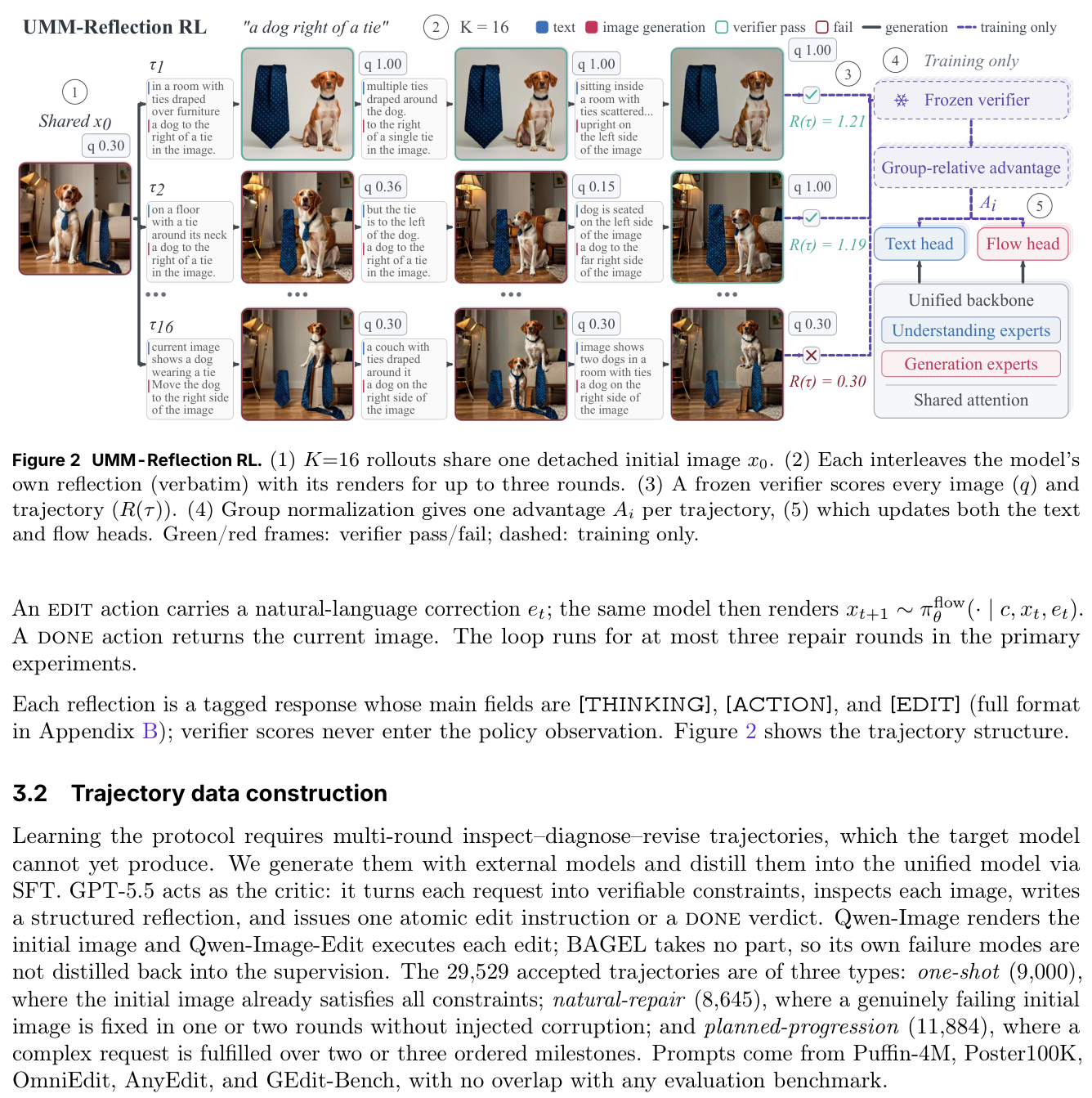
Figure 2 — 제안하는 UMM-Reflection 방법론의 전체 RL 루프와 구성 요소를 시각적으로 설명하는 핵심 다이어그램.
실험 결과, UMM-Reflection은 GenEval 벤치마크에서 SFT 대비 12.05 points 높은 0.84의 GenEval score를 달성했습니다 [Table 1]. 특히, position 카테고리에서 +42.00 points, color binding에서 +14.00 points, counting에서 +10.00 points의 상당한 성능 향상을 보였습니다. 또한, 학습에 사용되지 않은 외부 벤치마크인 WISE에서 +10.97 points (총 0.74), OneIG-Bench에서 +3.48 points (총 0.83), **T2I-CompBench++**에서 +4.63 points (총 0.55)의 transfer gain을 입증하여 [Table 2] 제안 방법론의 일반화 능력을 보여주었습니다. Ablation study에서는 UMM-Reflection이 SFT 대비 repair rate를 21%에서 65%로 약 세 배 증가시켰으며, joint training이 text head나 flow head만을 개별적으로 훈련하는 것보다 훨씬 우수함을 확인했습니다 [Table 3].
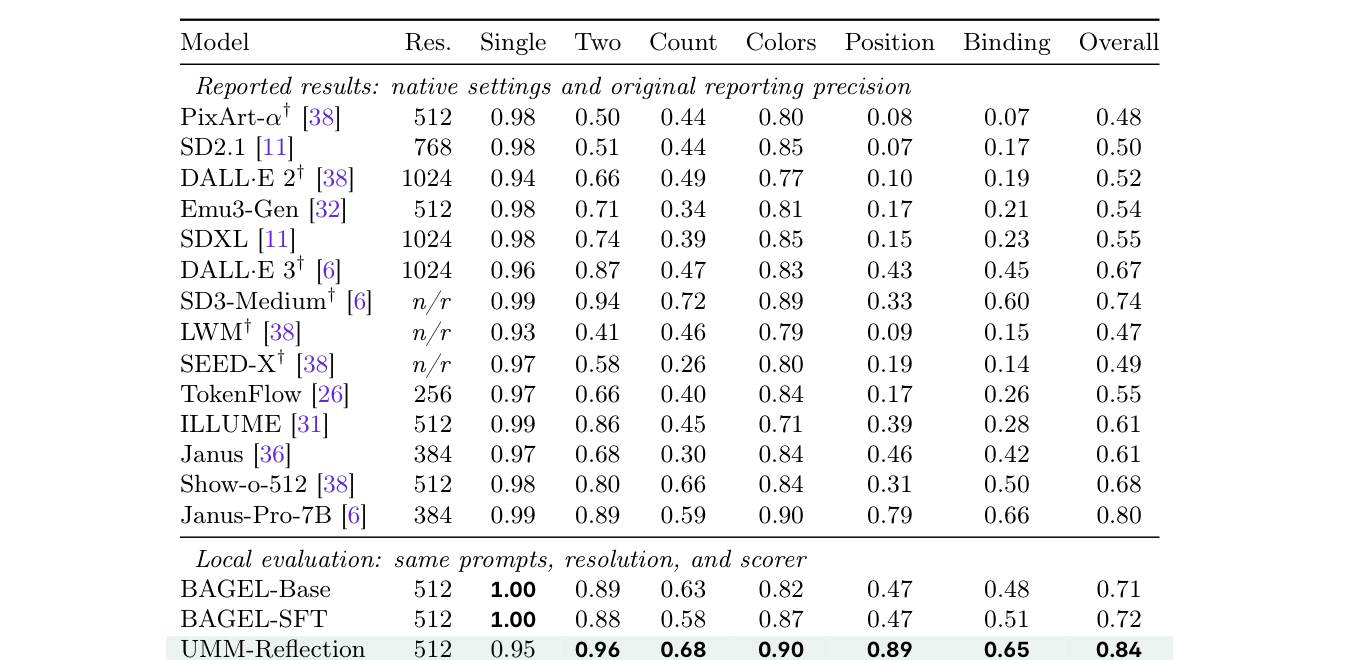
Table 1 — UMM-Reflection의 GenEval 벤치마크에서의 주요 성능(in-domain)과 기존 모델들과의 정량적 비교 결과를 보여주는 핵심 테이블.
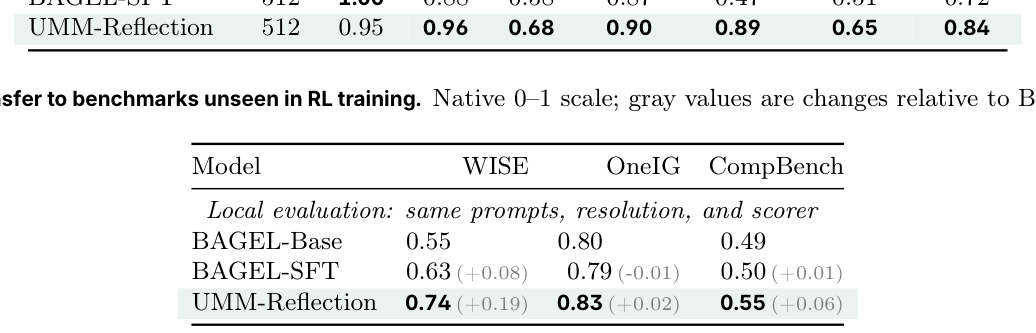
Table 2 — UMM-Reflection이 학습에 사용되지 않은 외부 벤치마크들에서 달성한 transferability와 성능 향상(out-of-domain)을 보여주는 테이블.
4. Conclusion & Impact (결론 및 시사점)
본 연구는 reinforcement learning을 통해 unified model의 native reflection 능력을 SFT의 "cold start" 상태에서 effective repair mechanism으로 전환시키는 데 성공했습니다. UMM-Reflection은 모델이 이미지를 inspect, diagnose, 그리고 revise하는 전체 multi-round loop를 하나의 unified policy 내에서 학습함으로써, 외부 critic이나 verifier 없이도 높은 성능의 self-correction을 가능하게 합니다. 이는 unified multimodal models의 compositional image generation 능력과 robustness를 크게 향상시키며, 복잡한 visual task 해결에 있어 새로운 가능성을 제시합니다. 특히, RL은 모델의 기존 correctness readout 지식을 활용하여 correct region에 도달하는 repair paths를 선택하도록 가르친다는 점 [Figure 5]에서, 모델이 "새로운 시각"을 얻는 것이 아니라 기존 지식을 더 잘 활용하게 됨을 시사합니다.
⚠️ 알림: 이 리뷰는 AI로 작성되었습니다.
관련 포스트
- [논문리뷰] VBVR-Pro: A Scalable and Verifiable Suite for Native Visual Reasoning
- [논문리뷰] Read It Back: Pretrained MLLMs Are Zero-Shot Reward Models for Text-to-Image Generation
- [논문리뷰] Gen-Searcher: Reinforcing Agentic Search for Image Generation
- [논문리뷰] Trust Your Critic: Robust Reward Modeling and Reinforcement Learning for Faithful Image Editing and Generation
- [논문리뷰] InternVL-U: Democratizing Unified Multimodal Models for Understanding, Reasoning, Generation and Editing
Review 의 다른글
- 이전글 [논문리뷰] Knowing When Thinking Is Not Enough: Teaching Small Reasoning Models to Reason Beyond Their Parametric Knowledge
- 현재글 : [논문리뷰] Learning Native Reflection in Unified Models with Interleaved Reinforcement Learning
- 다음글 [논문리뷰] Learning to Learn from Context: Synthetic Training from Perturbed Public Documents
댓글