[논문리뷰] Evaluating LLM Creativity through Long-Tail Performance
링크: 논문 PDF로 바로 열기
The browsing was successful. I have the HTML content of the paper. Now I will proceed with summarizing the paper according to the given constraints.
Part 1: Summary Body (Markdown)
Metadata:
- Authors: Yichen Wang, Tenghao Huang, Vishakh Padmakumar, Mina Lee
- Keywords: I will select these after reading the paper in detail. Likely candidates:
LLM Creativity,Long-Tail Performance,Novelty-Quality,Creativity Benchmarks,Reference Distribution,q@Tail(as it's a new diagnostic),Human Alignment.
Sections:
- 1. Key Terms & Definitions: Define 3-5 key terms.
- 2. Motivation & Problem Statement: What problem are they solving? Limitations of existing baselines.
- 3. Method & Key Results: Explain the proposed methodology and quantitative results.
- 4. Conclusion & Impact: Summarize conclusions and discuss implications.
Figures for Part 2:
I need to identify up to 3 important figures/tables and extract their image_url and provide a caption_kr.
Looking at the browsed content, I see:
- Figure 1:
2610.12998v1/llm-tail-creativity-1-v3.png- "Creativity benchmarks lie in the long tail of a reference input-output distribution." (Looks like a core conceptual figure). - Figure 2: Composed of A, B, C.
2610.12998v1/figures/exp1-v4/figure-1a-writing-v6.png,2610.12998v1/figures/exp1-v4/figure-1b-math-v6.png,2610.12998v1/figures/exp1-v4/figure-1c-other-brief-v6.png- "Creativity benchmarks shift toward higher input and/or output novelty than standard benchmarks across all three task domains." (Key empirical result). - Figure 3:
2610.12998v1/llm-creativity-elict-v6.png- "Three creativity elicitation operations illustrate shifts toward different tail regions." (Explains elicitation operations). - Figure 4:
2610.12998v1/figures/exp2-v2/arnea-hard/bin_split_arena-hard-creative_geometric-novelty-axes.png- "Within-benchmark tailness predicts agreement with human creativity rankings on creativity benchmark (Arena-Hard Creative Writing)." (Another key empirical result). - Figure 5:
2610.12998v1/figures/exp2-v2/gpqa/bin_split_gpqa-diamond_geometric-novelty-axes.png- "The same trend holds on standard benchmark (e.g., GPQA-Diamond)." (Supports Figure 4). - Table 1: "Diagnosing creativity-promoting methods." (Quantitative results of methods).
- Table 2: "Difficulty and novelty pick largely disjoint inputs." (Clarifies creativity vs. difficulty).
I will choose Figure 1 (conceptual framework), Figure 2 (main empirical evidence), and Figure 4 (human alignment evidence). Table 1 is also very important for methods, but I'll prioritize the figures showing core concepts and empirical trends.
Let's start drafting the summary.
Keywords selection: From the abstract and introduction, "LLM Creativity", "Long-Tail Performance", "Reference Distribution", "Novelty-Quality Product Formulation", and "q@Tail" are definitely central. "Creativity Benchmarks" and "Human Alignment" are also very relevant. I'll go with these 7.
Key terms:
- Reference Distribution (P_ref(x,y)): Defines the commonness of an input-output pair (x,y) relative to a text source like a pretraining corpus.
- Long-Tail Performance: LLM이 Reference Distribution의 낮은 확률 영역(즉, 희소하거나 특이한 입력 또는 출력 영역)에서 고품질의 출력을 생성하는 능력.
- Novelty-Quality Product Formulation: 창의성을 'Novelty'와 'Quality'의 곱으로 정의하는 공식.
- n-gram Novelty: 주어진 텍스트의 n-gram 중 Reference Corpus에 없는 n-gram의 비율로, 텍스트의 희소성을 측정하는 지표.
- q@Tail(α): 기존 벤치마크의 가장 Novel한 α%에 해당하는 input-output pair에 대한 모델의 평균 Task Quality를 측정하는 새로운 Creativity 진단 Metric.
Motivation & Problem Statement: The paper addresses the lack of a common notion of creativity among diverse LLM creativity benchmarks, which differ widely in task and metric design and can lead to conflicting conclusions. Existing literature reviews highlight this fragmentation, but a fundamental challenge remains: identifying a common evaluative target beneath these heterogeneous designs. Specifically, while novelty-quality formulations explain metric differences, the implicit target underlying tasks designed to elicit creativity is unclear. This ambiguity hinders principled design, validation, and comparison of LLM creativity evaluations.
Method & Key Results: 본 논문은 LLM Creativity의 공유된 목표를 Reference Input-Output Distribution의 Long Tail Performance로 공식화한다. 여기서 Reference Distribution은 Pretraining Corpus와 같은 선택된 텍스트 소스에 대한 Input과 Output의 Commonness를 지정한다. 이 접근 방식은 Creativity를 Novelty-Quality Product Formulation으로 해석하며, 동일한 Quality 차이가 Novelty가 높은 영역에서 발생할 때 더 큰 Creativity 점수에 기여한다는 이론적 기반을 가진다.
저자들은 Pile pretraining corpus를 Reference Source로, n-gram Novelty (특히 4-gram)를 Novelty Metric으로 사용하여 15개 벤치마크와 26개 오픈 소스 모델에 대해 Empirical Evaluation을 수행했다. 주요 결과는 다음과 같다:
- Creativity 벤치마크는 Standard 벤치마크보다 Reference Distribution의 Tail Region에 더 많이 위치한다 [Figure 2, cite: 1]. 이는 Writing, Mathematics Reasoning, Free-form QA 등 모든 Task Domain에서 일관되게 나타난다. 예를 들어, Arena-Hard Creative Writing은 Standard 벤치마크보다 높은 Input 및 Output Novelty를 보인다 [Figure 2, cite: 1].
- Creativity Elicitation Operation (Curation, Prescription, Constraint)은 벤치마크를 Input-Tail, Output-Tail, Joint-Tail과 같은 Distinct Tail Sub-Regions으로 유도한다 [Figure 3, cite: 1].
- 각 벤치마크 내에서 Higher-Tail 서브셋의 모델 Ranking은 LM Arena Creative-Writing Ranking과 더 높은 Kendall's τ를 보여, Human Creativity Judgment와 더 밀접하게 일치한다 [Figure 4, Figure 5, cite: 1]. 특히, Arena-Hard Creative Writing에서 Tail Bin 4-5는 Kendall's τ가 +0.33에서 +0.39에 달하는 반면, Peak Bin 1-3은 +0.06에서 +0.15에 불과했다 [Figure 4, cite: 1]. Standard 벤치마크인 GPQA-Diamond에서도 유사한 경향이 관찰되었다 [Figure 5, cite: 1].
- 이러한 발견을 바탕으로, 기존 벤치마크의 가장 Novel한 α fraction에 대한 평균 Task Quality를 측정하는 저비용 Creativity Diagnostic인 q@Tail(α)를 도입한다. 이를 Creativity-Promoting Methods에 적용한 결과, 대부분의 Method는 Output Novelty를 증가시키지만 Tail에서의 Quality는 일관되게 개선하지 못했다. 이는 Stronger Tail Performance를 통해 LLM Creativity를 개선할 상당한 여지가 있음을 시사한다 [Table 1, cite: 1]. 예를 들어, min-pp sampling만이 Quality at Tail을 17.7% 향상시켰지만, 전반적인 Novelty를 16.3% 감소시켰다 [Table 1, cite: 1].
Conclusion & Impact: 본 연구는 LLM Creativity 평가를 위한 공통 목표가 Reference Input-Output Distribution의 Long-Tail Performance에 있음을 제안하고 이론적 및 실증적 증거를 제시한다. Creativity 벤치마크가 Standard 벤치마크보다 Tail Region에 집중되어 있으며, 이러한 Tail Region에서의 모델 성능이 Human Creativity Judgment와 더 잘 일치함을 보였다. 이러한 통찰을 통해 제안된 q@Tail(α) Diagnostic은 기존 벤치마크를 활용하여 모델의 Creativity를 효율적으로 진단할 수 있는 방법을 제공한다. 이 연구는 Creativity-Promoting Methods의 개선이 Tail Quality 향상에 집중되어야 함을 강조하며, 이는 학계 및 산업계에서 보다 Human-Aligned되고 실질적으로 창의적인 LLM 개발을 위한 중요한 방향을 제시한다.
Now, I will make sure the figure references are correct and format the output.
I need to be very careful with the figure URLs from the browsed content.
Figure 1: 2610.12998v1/llm-tail-creativity-1-v3.png
Figure 2: (This is split into A, B, C but Figure 2 itself refers to the three sub-figures as a whole). I will use the first one from the list in my JSON for image_url.
Figure 4: 2610.12998v1/figures/exp2-v2/arnea-hard/bin_split_arena-hard-creative_geometric-novelty-axes.png
Let me double check the section constraints:
- Technical Terminology in English: Yes, maintained.
- Natural Korean Phrasing: Yes, mixed English terms.
- Mandatory Metadata: Yes, will add authors and keywords.
- Output Format: Part 1 (Markdown), Part 2 (JSON) separated by `
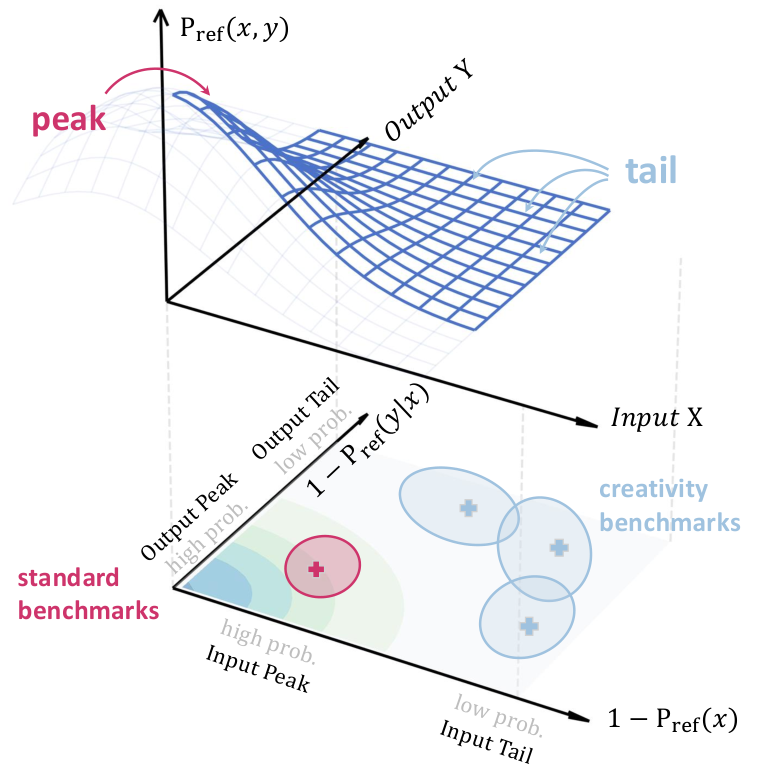
Figure 1 — Creativity 벤치마크의 Long Tail 위치
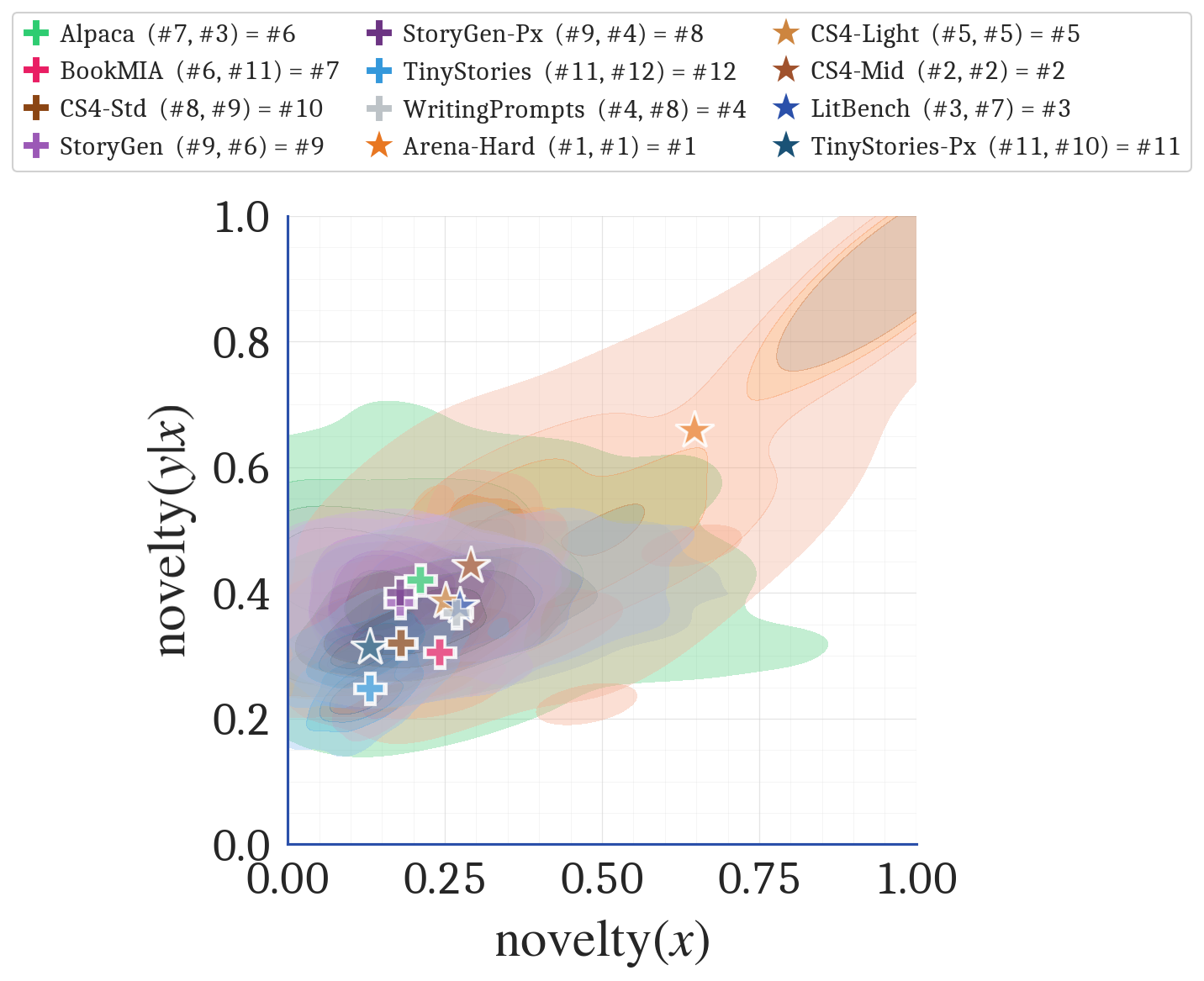
Figure 2 — Task Domain별 Creativity 벤치마크 비교
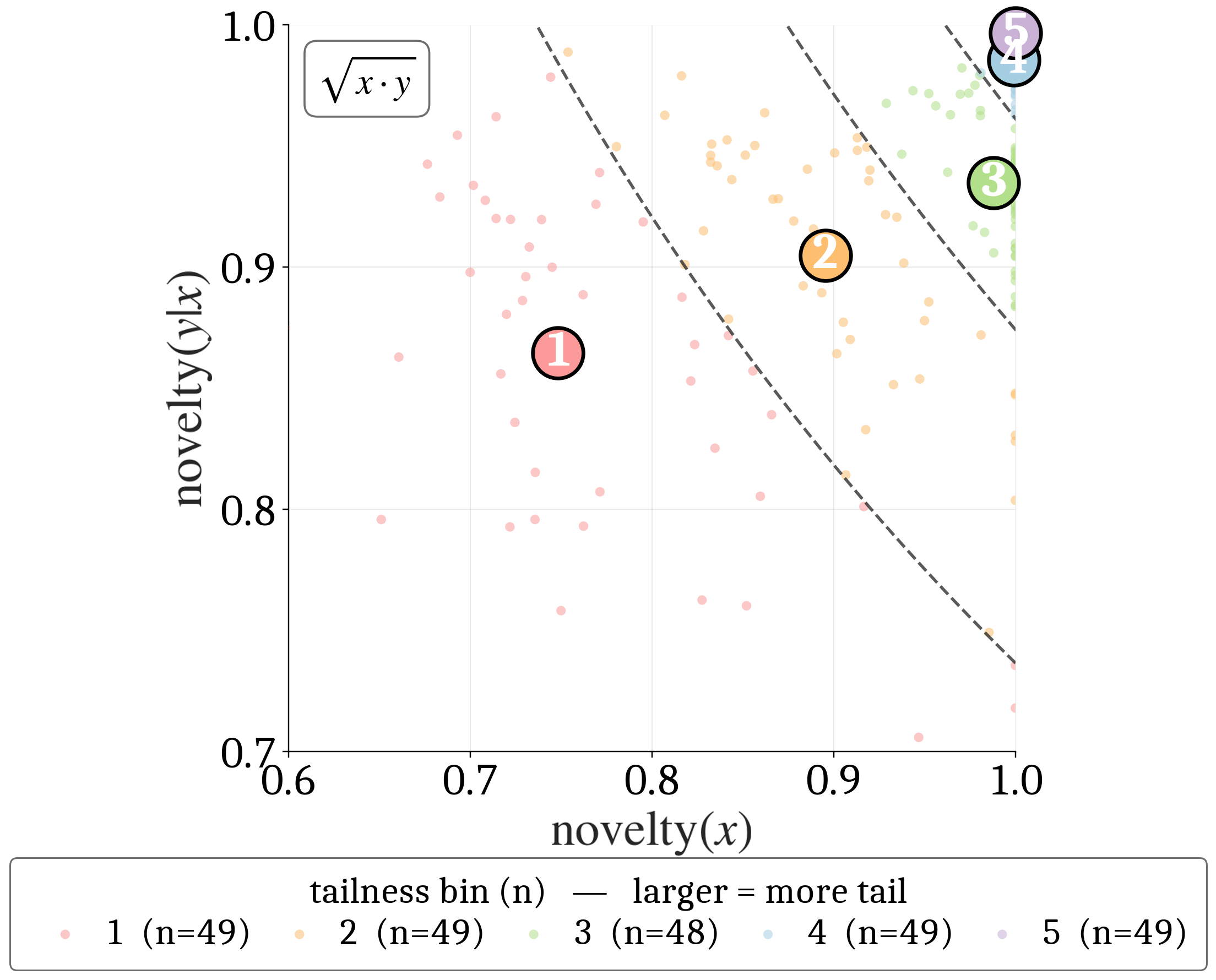
Figure 4 — Tailness와 인간 Creativity 평가의 일치도
⚠️ 알림: 이 리뷰는 AI로 작성되었습니다.
관련 포스트
- [논문리뷰] LLMs4All: A Review on Large Language Models for Research and Applications in Academic Disciplines
- [논문리뷰] WorldCast: Exploring Intelligent Visual Generation in World State Prediction
- [논문리뷰] Waypoint-OPD: Transferring RL-Induced Policy Shifts via Gated On-Policy Distillation
- [논문리뷰] Virtual Head Attention
- [논문리뷰] VLA-Δ: Learning Physical State Transition for Vision-Language-Action Models
Review 의 다른글
- 이전글 [논문리뷰] CrossTimeEdit: A Decade-Spanning Cross-View Dataset and Reward-Guided Editing for Historical Street-View Generation
- 현재글 : [논문리뷰] Evaluating LLM Creativity through Long-Tail Performance
- 다음글 [논문리뷰] GroundAnything: Reconciling Parallel Decoding with Precise Visual Grounding at Flash Speed
댓글