[논문리뷰] Speculative Sampling in Interactive Video Generation
링크: 논문 PDF로 바로 열기
저자: Yubo Huang, Yuxuan Zhang, Jiaming Liu, Sirui Zhao, Enhong Chen
Part 1: 요약 본문
1. Key Terms & Definitions (핵심 용어 및 정의)
- Speculative Sampling: Interactive video generation에서 low-latency interaction을 제공하면서도 large bidirectional modeling window의 이점을 유지하기 위해 제안된 전략이다. 이는 noise latents를 padding으로 추가하여 modeling window를 확장하고, 예측을 캐싱하여 재사용하며, uncommitted future를 교체 가능하게 유지한다.
- Chunk Size (K): DiT Sampling 호출에서 joint로 샘플링되는 latent frames의 개수를 의미한다. 이 파라미터는 joint temporal modeling 능력과 GPU parallel efficiency에 직접적인 영향을 미친다.
- DiT Sampling: Diffusion in Transformer 모델에서 video latents를 생성하는 핵심 과정으로, 비디오 품질과 생성 시간에 결정적인 역할을 한다.
- Output Commitment: 생성된 비디오 content를 playback에 대해 non-replaceable 상태로 확정하는 과정이다. 기존 시스템에서는 주로 chunk boundary에서 발생하여 Latency의 하한선을 결정한다.
- Latency: Condition arrival부터 해당 condition이 반영된 첫 번째 output group이 playback에 display되는 시점까지의 총 지연 시간으로, random-arrival waiting (R), generation time (C), playback waiting (Q)의 합으로 구성된다.
2. Motivation & Problem Statement (연구 배경 및 문제 정의)
본 논문은 interactive video generation에서 low-latency interaction을 달성하는 동시에 높은 video quality와 GPU parallelism 활용을 유지하는 문제를 해결하고자 한다. 기존 interactive video generation 시스템들은 주로 작은 bidirectional chunks를 사용하여 response latency를 줄였으나, 저자들의 사전 실험 결과에 따르면 더 큰 chunks는 video quality를 향상시키고 GPU parallelism을 더 효율적으로 활용하여 sampling 시간을 크게 늘리지 않으면서도 더 많은 latents를 샘플링할 수 있음을 발견했다. 핵심 문제는, 새로운 출력이 고정된 chunk playback boundaries에서만 반영될 수 있는 기존 인터페이스가 chunk duration에 의해 발생하는 waiting-time lower bound를 시스템에 부과한다는 점이다 [cite: 1, Figure 2]. 이러한 제약은 low-latency interaction이 필연적으로 더 작은 bidirectional modeling window를 요구하게 만들어, joint temporal modeling 능력과 parallel efficiency를 저해하는 trade-off를 발생시킨다. 따라서 저자들은 low-latency interaction이 반드시 작은 bidirectional modeling window를 대가로 해야 하는지에 대한 근본적인 질문을 제기한다.
3. Method & Key Results (제안 방법론 및 핵심 결과)
저자들은 large bidirectional window의 modeling power와 small window의 low-latency interaction을 결합하는 Speculative Sampling 방법론을 제안한다. 이 방법론은 noise latents를 padding으로 추가하여 bidirectional modeling window를 확장하고, 생성된 예측을 condition이 변하지 않는 한 prediction cache에 저장하여 재사용한다 [cite: 1, Figure 1]. 시스템은 extended finite-state machine 형태의 컨트롤러를 통해 Produce (generation job active)와 Consume (no job active, predictions reused) 두 가지 상태를 조율하며, 재생은 이와 독립적으로 진행된다 [cite: 1, Figure 3]. 이 설계는 DiT Sampling 호출을 개별 delivery와 분리하여, 완료된 예측을 condition 업데이트 사이에서 재사용함으로써 fine-grained delivery를 위해 불필요한 resampling을 방지한다. 또한, 새로운 condition이 도착하면 feasible suffix만 replan하고 교체 가능한 future만을 업데이트하여 recomputation overhead를 줄인다.
실험 결과, Speculative Sampling은 기존 chunk-level commitment (Baseline) 방식에 비해 response Latency를 현저히 감소시켰다. 특히, Sol-H3 모델의 경우 long chunk 설정에서 평균 L50 Latency를 약 2.814초 단축했으며, Wan1.3B에서는 1.744초, LTX eager에서는 2.116초 단축하여, chunk size가 클수록 boundary wait 제거 효과가 커진다는 이론적 분석과 일치하는 경향을 보였다. 주목할 점은 Sol-H3 모델에서 Speculative Sampling을 적용한 long chunk 설정이 low-frequency updates에서 1.42초, high-frequency updates에서 1.41초의 L50 Latency를 달성하여, 기존 short baseline의 1.87초보다 우수한 성능을 보여주었다는 것이다. 이는 큰 bidirectional modeling window를 유지하면서도 responsiveness를 향상시킬 수 있음을 입증한다. 또한, long chunk 설정은 Wan1.3B와 Sol-H3에서 각각 17-20% 및 18-23%의 낮은 GPU kernel activity를 기록하며, 더 많은 concurrent streams를 처리할 수 있는 serving headroom을 제공한다.
4. Conclusion & Impact (결론 및 시사점)
본 논문은 interactive video generation을 prediction과 output commitment의 결합 문제로 새롭게 접근하며, Speculative Sampling이라는 효율적인 전략을 제시한다. 이 방법론은 multi-latent joint generation의 이점을 유지하면서, 조건 변화가 없을 때는 완료된 예측을 재사용하고, 변화가 발생했을 때는 재생 가능한 prefix를 보존하며 교체 가능한 future만을 replan하여 불필요한 recomputation을 최소화한다. 이 연구의 핵심 시사점은 interactive video generation 시스템 설계의 초점을 generation unit의 크기를 줄이는 것에서, high-quality joint generation을 가속화하고, revocable prediction을 효과적으로 관리하며, timely delivery를 스케줄링하는 방향으로 전환시킨다는 점이다. 이는 복잡한 streaming post-training 없이도 large bidirectional models을 interactive streaming systems에 성공적으로 적용할 수 있는 새로운 경로를 열어주며, 학계와 산업계 모두에서 고품질 비디오 콘텐츠의 실시간 상호작용 경험을 향상시키는 데 중요한 기여를 할 것으로 기대된다.
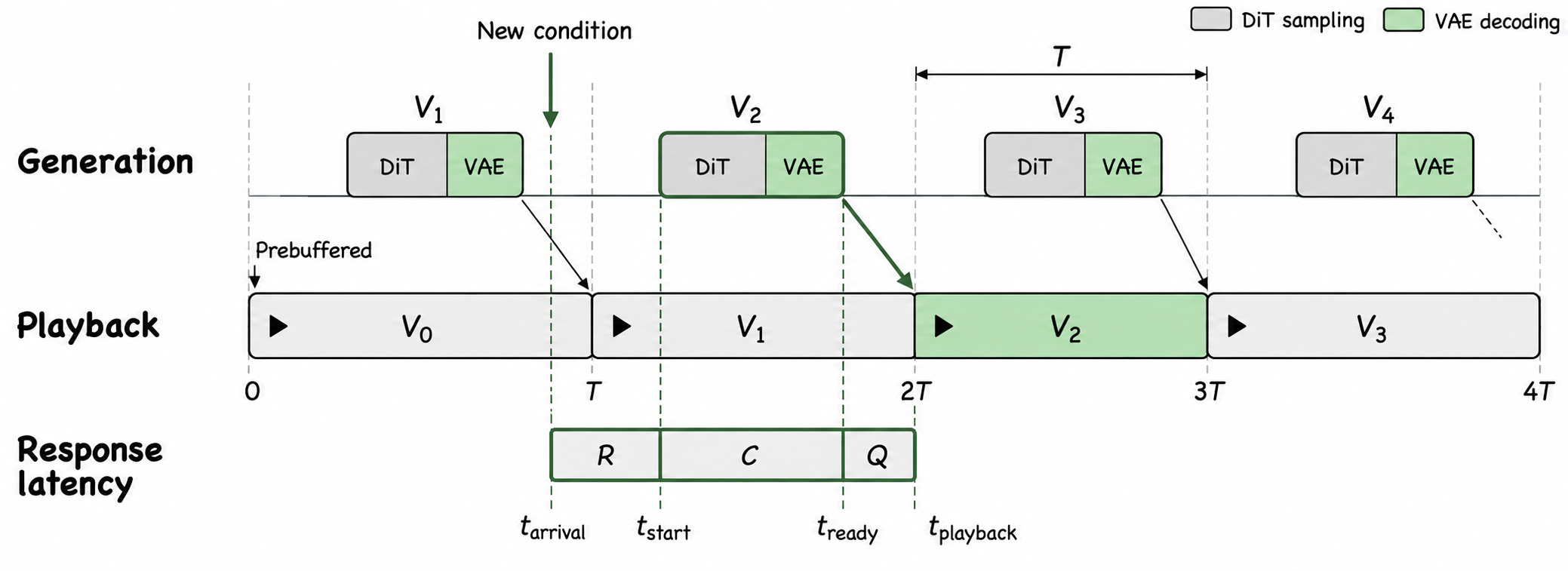
Figure 2 — 응답 Latency의 구성 요소
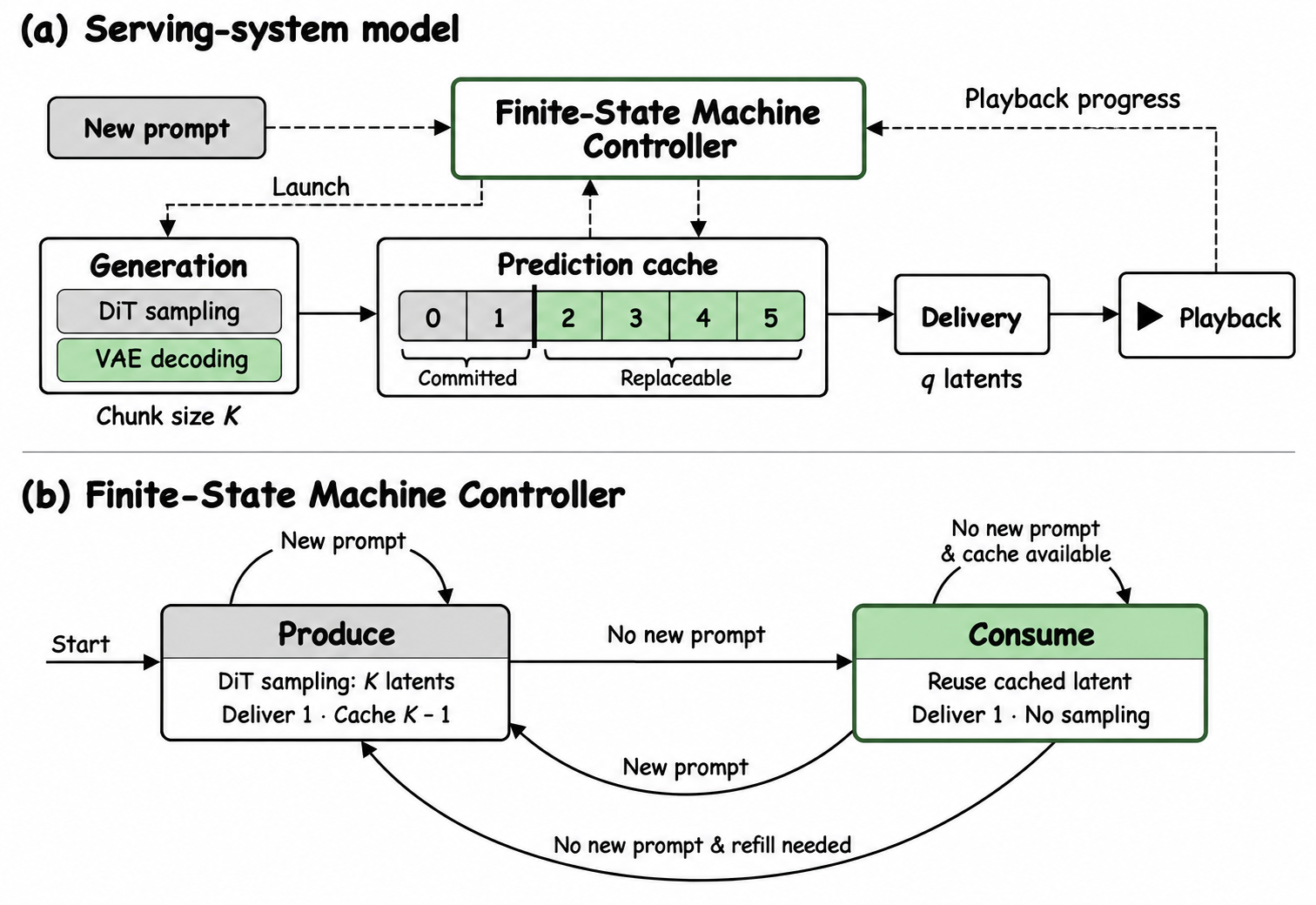
Figure 3 — Speculative Sampling 시스템 및 제어
⚠️ 알림: 이 리뷰는 AI로 작성되었습니다.
관련 포스트
- [논문리뷰] GroundAnything: Reconciling Parallel Decoding with Precise Visual Grounding at Flash Speed
- [논문리뷰] AgSpec: Pushing the Limits of Retrieval-Based Speculative Decoding in Coding Agent Pipelines
- [논문리뷰] WorldAttention: An Efficient Attention Architecture for Interactive Video World Models
- [논문리뷰] MassAlloc Attention: Let Attention Allocate Its Own Compute
- [논문리뷰] What Did I Just Say? Self-Listening for Full-Duplex Speech Models
Review 의 다른글
- 이전글 [논문리뷰] Selection Is Not Learning: Choosing Model Futures
- 현재글 : [논문리뷰] Speculative Sampling in Interactive Video Generation
- 다음글 [논문리뷰] StopWatch: Goal Grounding for Object-goal Navigation
댓글