[논문리뷰] Are Causal Neuron Circuits Unique and Transferable?
링크: 논문 PDF로 바로 열기
저자: Ömer Tekin Yavuz
1. Key Terms & Definitions (핵심 용어 및 정의)
- Group Intervention: 선택한 neuron 집합을 제거하거나 덮어쓴 뒤 model output이 바뀌는지 확인하는 interpretability 검증 방식이다. Goodfire의 "Lion King" 예시(Qwen3-32B, 18 neurons)가 대표적이다.
- Neuron: 특정 layer에서 MLP down-projection의 입력, 즉 gated MLP activation의 한 coordinate를 말한다. 모든 intervention은 마지막 prompt token에만 적용된다.
- Margin (m) / Δ/m₀: 정답 token c와 대안 token w의 logit 차이 m = logit(c) − logit(w)이다. Δ/m₀ = 1이면 margin이 0이 되고, Δ/m₀ > 1이면 대안(bridge)이 선호되어 답이 flip된다.
- Minimal Set / Disjoint Alternatives: Minimal set은 effect threshold를 넘지만 어떤 proper subset도 넘지 못하는 subset이다. Disjoint alternatives는 neuron을 하나도 공유하지 않는 minimal set 쌍이며, circuit의 non-uniqueness를 보여주는 지표로 쓰인다.
- Content-matched Control (Resampling/Patching): 다른 질문이나 chain에서 얻은 activation으로 neuron 값을 대체하는 control이다. Random-neuron control로는 구분되지 않는 generic group과 content-specific group을 가려낸다.
2. Motivation & Problem Statement (연구 배경 및 문제 정의)
이 논문은 "neuron group에 개입해 답이 바뀌었을 때, 그 group 중 실제로 필요한 부분은 얼마인가?"라는 질문에 답하고자 한다.
기존 group intervention 시연은 group이 중요하다는 existence proof를 제공한다. 그러나 다음 질문들에는 답하지 않는다.
- 몇 개의 neuron이면 충분한가?
- 다른 disjoint subset도 같은 효과를 내는가 (Uniqueness)?
- 각 neuron의 효과가 additive한가 (Interaction)?
- 다른 phrasing이나 질문에도 효과가 일반화되는가 (Transfer)?
Méloux et al.은 toy network에서 mechanistic explanation이 unique하지 않을 수 있음을 보였지만, pre-trained LLM에서 실제로 보고되는 neuron group 수준의 검증은 이루어지지 않았다. 또한 random-neuron control만으로는 group이 질문 내용과 관련된 정보를 담고 있는지 판별할 수 없다는 문제가 있다.
3. Method & Key Results (제안 방법론 및 핵심 결과)
저자는 12-neuron group의 모든 2¹² = 4,096개 subset을 exhaustive하게 측정하는 프레임워크를 제안한다.
방법론
- 후보 선정: 모든 neuron을 first-order attribution(a·∂m/∂a, 또는 patching의 경우 (a_target − a_source)·∂m/∂a)으로 ranking한다. 이어 실제 single-neuron intervention을 측정해, 측정 effect 상위 6개와 estimate 기준 다음 6개를 합쳐 12개 후보를 고정(frozen)한다.
- 분석 지표: additivity(R², slope), pairwise interaction, minimal set, disjoint alternative, transfer를 계산한다.
- Intervention 종류: zero ablation, mean ablation, resampling, patching 네 가지를 비교한다.
- Control: layer-matched random 12 neurons와 비교한다.
- 수치 정밀도: Study 2는 bfloat16으로 실행되며, noise floor는 0.125–0.500 logits로 측정되었다.
Study 1 (Qwen3-0.6B, 두 선택지 capital 문제)
- Zero-ablation group은 margin을 0.27 [0.26, 0.30] 감소시켰고, random group의 효과는 −0.00이었다.
- 효과는 거의 완벽하게 additive했다(R² = 0.99, slope 1.00, interacting pair 0개).
- Rephrasing transfer도 높았다(Spearman 0.96–1.00).
- 그러나 다른 capital 질문의 값으로 resampling하면 효과가 사실상 0이었다(0.00 [−0.01, 0.01]) [Figure 1].
- 해당 activation은 질문 간 거의 일정했다(median absolute deviation 0.12 vs. median magnitude 2.53).
- 즉, standard check를 모두 통과하는 group이 질문별 content를 담고 있다는 증거는 발견되지 않았다.
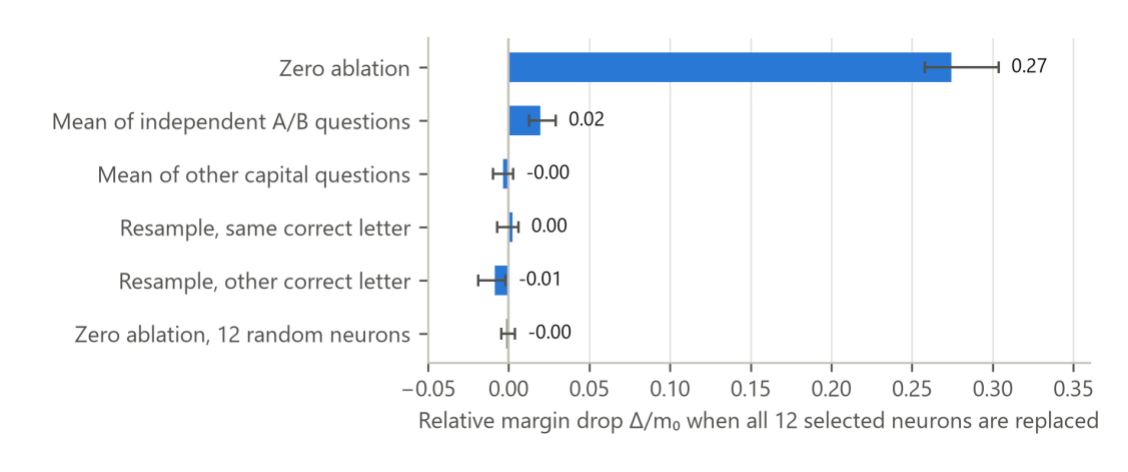
Figure 1 — Zero ablation은 큰 효과를 보이지만 content-matched resampling은 효과가 없음을 보여, random control만으로는 불충분하다는 핵심 주장을 뒷받침
Study 2 (two-hop chains: Qwen3-1.7B, Llama-3.2-1B, Gemma-3-1B)
- Answer shift: first-hop 질문의 activation을 12 neurons에 patching하면 답이 bridge entity로 flip되었다(Scar → Simba). Flip은 10/11, 10/11, 8/10 chain에서, greedy generation이 bridge로 시작한 경우는 9/11, 9/11, 8/10 chain에서 나타났다. Random neurons는 0회 flip했다.
- Necessity: 전체 group은 필요하지 않았다. Lion King chain의 최소 flipping subset은 Qwen3-1.7B 4개, Llama 8개, Gemma 7개였다. 전체 chain으로 보면 1개 neuron만으로 flip되는 경우도 다수 있었다 [Figure 3].
- Uniqueness: disjoint flipping subset 쌍이 존재하는 chain은 3/10, 7/10, 7/8이었다. 탐색적 분석에서 m₀ < 4인 chain은 13/15, m₀ ≥ 4인 chain은 4/13만 disjoint alternative를 가졌다. 단, 이 cut-off는 post hoc로 정해졌다.
- Interaction: scaled additive fit의 R²는 0.84–0.90, slope는 0.78–0.83(sub-additive)이었다. Threshold를 넘는 interaction pair는 드물었다(예: Qwen3-1.7B에서 726쌍 중 4쌍).
- Transfer: 같은 chain의 rephrasing에는 Spearman 0.97–0.98로 강하게 transfer되었다. 다른 chain에서는 Δ/m₀가 0.09–0.18로, 자기 chain의 1.52–1.89에 비해 크게 약했다.
- Bridge 특이성의 한계: 다른 chain의 composed question activation으로 patching해도 margin이 상당히 감소했다(Δ/m₀ 0.85–0.92). 따라서 effect의 일부는 bridge-specific이 아니다.
- 공통 chain 비교: 세 model 모두에 포함된 7개 공통 chain에서도 같은 패턴이 재현되었다. Disjoint alternative는 margin이 가장 큰 Qwen3-1.7B에서 가장 적었다(1/7 vs. 4/7, 5/7) [Table 3].
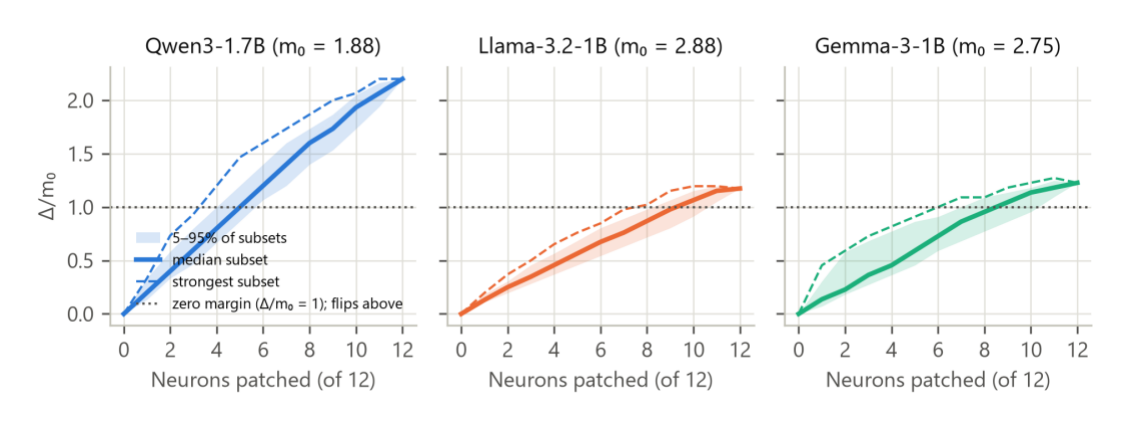
Figure 3 — 4,096개 subset의 exhaustive analysis로 전체 group이 필요하지 않고 효과가 점진적으로 누적됨을 보여주는 핵심 결과
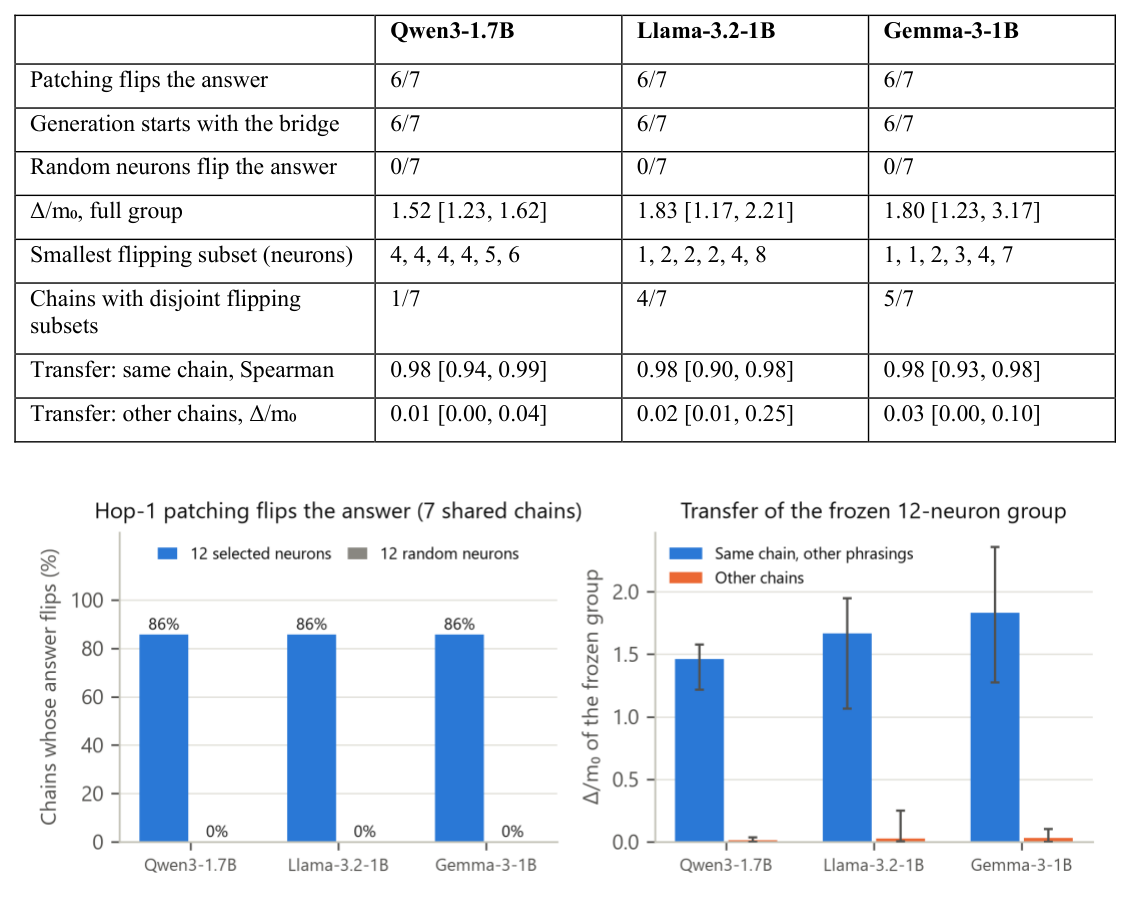
Table 3 — 세 model family에 걸친 flip, uniqueness, transfer 결과를 종합 비교하는 핵심 테이블
4. Conclusion & Impact (결론 및 시사점)
이 논문은 neuron group intervention이 답을 바꾸더라도 실제 효과는 대개 소수의 neuron이 담당하며, model confidence가 낮을 때는 서로 겹치지 않는 subset들이 각각 같은 shift를 만들 수 있음을 보였다.
따라서 "이 N개 neuron을 제거하면 답이 바뀐다"는 진술은 sufficient intervention에 대한 existence proof일 뿐, necessary mechanism에 대한 기술이 아니다. 또한 minimal set은 후보 group에 대해서만 minimal하며, model의 circuit 자체는 아니다.
실무적으로 저자는 group demonstration에 다음 세 가지를 함께 보고할 것을 제안한다.
- Content-matched control (random control에 추가하여)
- Sufficient subset의 size distribution
- Clean margin (m₀)
이 연구는 identifiability 문제를 실제 pre-trained LLM에서 측정 가능한 형태로 옮겼다는 의의가 있다. 다만 pilot-scale(0.6–1.7B model, chain당 최대 11개), last-token-only intervention, bfloat16 precision이라는 한계가 있다.
⚠️ 알림: 이 리뷰는 AI로 작성되었습니다.
관련 포스트
- [논문리뷰] Friends and Grandmothers in Silico: Localizing Entity Cells in Language Models
- [논문리뷰] Targeted Neuron Modulation via Contrastive Pair Search
- [논문리뷰] Measuring the Depth of LLM Unlearning via Activation Patching
- [논문리뷰] Can Dialects Be Steered Like Languages? Sparse Neurons and Distributed Directions in Arabic LLMs
Review 의 다른글
- 이전글 [논문리뷰] onóna: Twin Embeddings with Tied Unembeddings
- 현재글 : [논문리뷰] Are Causal Neuron Circuits Unique and Transferable?
- 다음글 [논문리뷰] Are Dense Rewards Worth Their Tokens in GRPO?
댓글